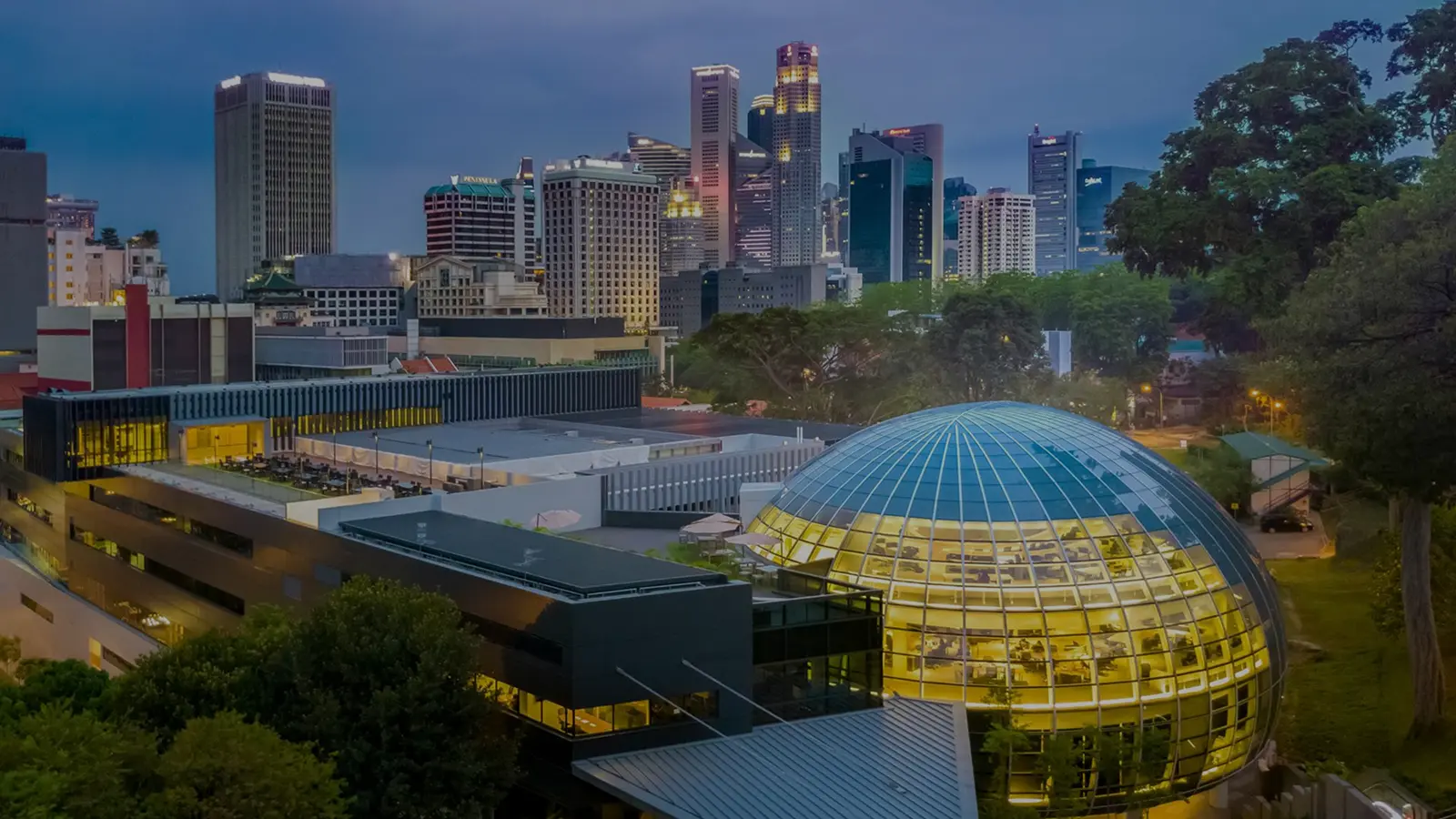
Legora, the agentic operating system for legal professionals, and Singapore Management University (SMU) today announced that SMU’s Yong Pung How School of Law is joining Legora's Legal AI Scholars Program, becoming the first university in Asia to do so.
Under the partnership, SMU's law faculty will receive licenses and training on the platform, with access expanding to students and courses as SMU integrates Legora into its teaching.
SMU joins a growing community of Legal AI Scholars Program institutions that includes Northwestern Pritzker School of Law, the University of Chicago Law School, Cornell Law School, the University of Texas School of Law, Boston University School of Law, and the University of San Francisco School of Law.
SMU Yong Pung How School of Law, established in 2007 and renamed in 2021 in honour of former Chief Justice Yong Pung How, has built a substantial track record at the intersection of law and technology. It introduced a law and technology track in 2023, offering students cross-disciplinary study of the legal and regulatory issues raised by emerging technologies. The following year, it launched the Centre for Digital Law (CDL) which integrates research expertise across law, computer science and digital humanities. In 2025, CDL announced a three-year project to develop Singapore’s first open empirical legal database, with the support of Singapore’s Ministry of Law, to strengthen Singapore’s legal data infrastructure for the digital age. Most recently in June 2026, the School hosted the International Conference on Artificial Intelligence & Law for the first time in Asia.
This partnership extends that trajectory into the classroom, giving faculty access to the agentic AI tools now shaping legal practice. On Legora, lawyers direct AI agents through the work itself, including legal research, reviewing documents at scale and drafting, so students learn the platform the way lawyers use it in practice.
“Technology literacy is already embedded across SMU’s programmes; this partnership deepens the integration of AI competencies specifically within legal education. Our students will practise law in a profession where AI is not optional but foundational; at the same time, we have introduced safeguards to preserve the rigorous development of foundational legal skills and to cultivate the sound and ethical judgement that will remain a distinctive human value-add to the profession. We are pleased to partner with Legora as we work through what this shift means for how lawyers are trained," said Professor Lee Pey Woan, Dean of SMU Yong Pung How School of Law.
Through the Legal AI Scholars Program, students and faculty train on the same platform used by leading law firms for research, review and drafting across complex matters. This means graduates arrive in practice already proficient in the tools shaping the profession. Partner schools receive purpose-built guides, training videos and use-case-specific training sessions.
Legora's dedicated team also works directly with faculty to embed AI exercises and assignments into existing courses, building proficiency in the classroom rather than leaving it to on-the-job learning. At SMU, faculty will be onboarded first, with training delivered by Legora's Asia-Pacific legal engineering team and SMU Libraries, before access widens course by course as the faculty identifies where the platform best supports its teaching.
“The lawyers graduating now will spend their entire careers working alongside AI, and the gap between schools that prepare them for that and schools that don't is going to show up quickly in practice. SMU understood this and now sits at the centre of how the next generation of lawyers will be trained. Their graduates will arrive in practice already fluent in the tools their firms are using, and that head start compounds over a career,” said Heather Paterson, VP of Legora APJ.
The announcement comes as Legora deepens its presence in Asia-Pacific, with offices in Singapore, Sydney, Tokyo, Seoul and Bengaluru.
About Legora
Legora is the agentic operating system for legal work, supporting lawyers in research, review, and drafting across complex matters. It is used by more than 100,000 legal professionals at more than 1,800 leading law firms and in-house legal teams across over 50 markets.
About Singapore Management University
Established in 2000, Singapore Management University (SMU) is recognised for its high-impact, multi-disciplinary research that addresses Asian issues of global relevance, and for its interactive, collaborative and project-based approach to learning. Home to over 13,000 students across two colleges and six schools, SMU offers bachelors, masters and PhD programmes across Accountancy, Business, Economics, Information Systems, Integrative Studies, Law and Social Sciences, as well as executive development and continuing education programmes. Through its city campus, SMU enjoys strategic linkages with business, government and the wider community in Singapore and beyond. smu.edu.sg
About SMU Yong Pung How School of Law
SMU’s law school was renamed Yong Pung How School of Law (YPHSL) on 11 April 2021 to celebrate and honour the late Dr Yong Pung How, Singapore’s former Chief Justice and SMU’s third Chancellor.
The law school had proudly welcomed its first cohort of 116 students in August 2007. Taught by a dynamic faculty with postgraduate degrees from renowned universities, the School aims to nurture its students to become excellent lawyers who will contribute significantly to society. Trained with the ability to contextualise legal expertise and to think across disciplines and geographical borders coupled with SMU’s interactive pedagogy, SMU’s law graduates are confident, articulate and analytically agile.
The School offers a four-year full-time Bachelor of Laws programme, a five-year double-degree programme which combines law with Accountancy, Business, Economics, Computing & Information Systems or Social Sciences; a three-year Juris Doctor programme; a Master of Laws programme; a PhD programme in Law, Commerce and Technology; as well as continuing legal education. From Academic Year 2020-2021, the School also jointly offers a new Bachelor of Science (Computing & Law) with the SMU School of Computing and Information Systems. This new degree will produce IT and legal professionals who are adept at bridging technology and law.
Research at the SMU YPHSL has a strong focus in three main inter-related areas – Law and Technology, Transnational Commercial law in Asia, and Dispute Resolution. The School has also set up legal research centres focusing on A.I. and data governance, computational law, commercial law, and international dispute resolution. law.smu.edu.sg