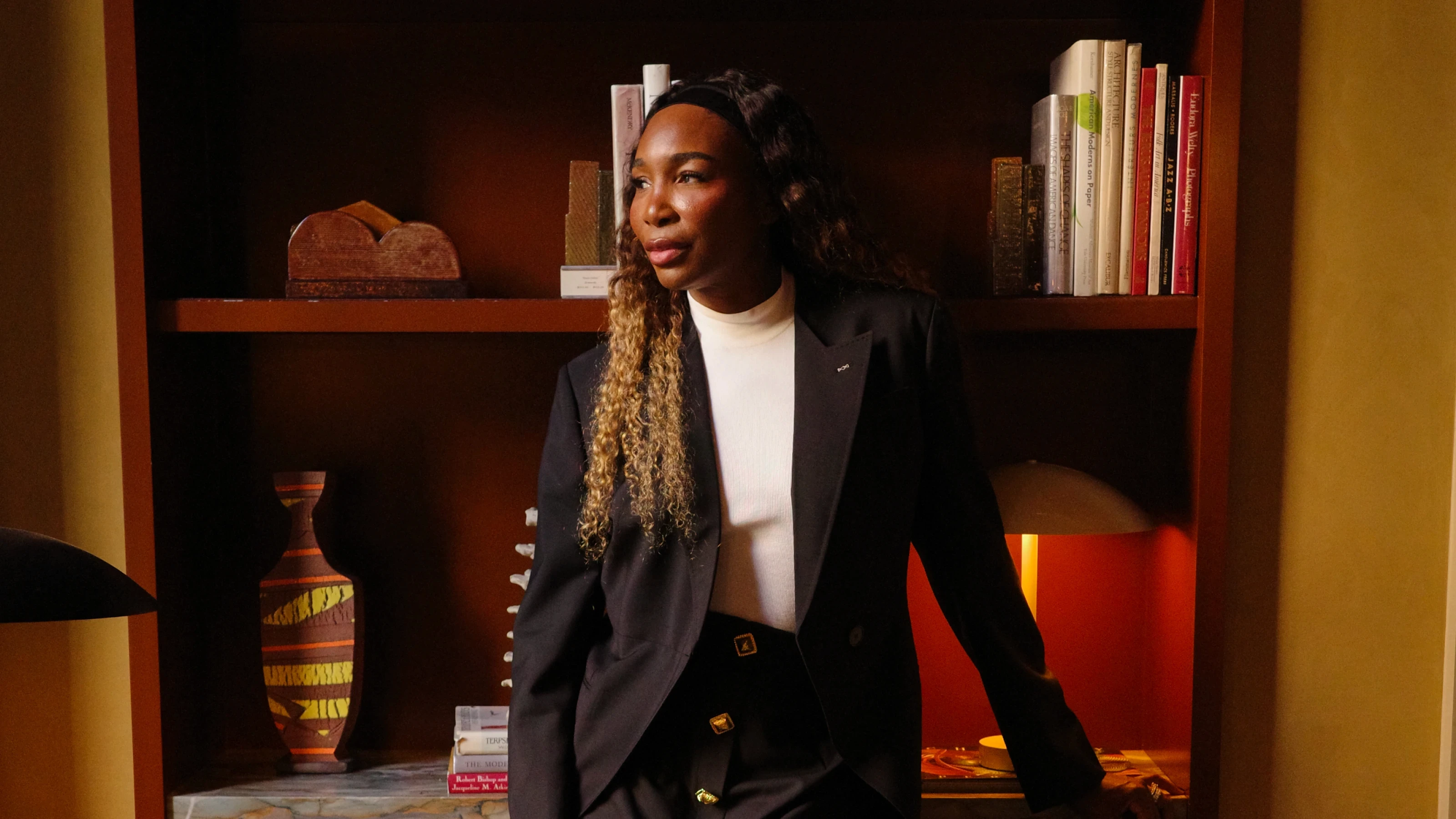
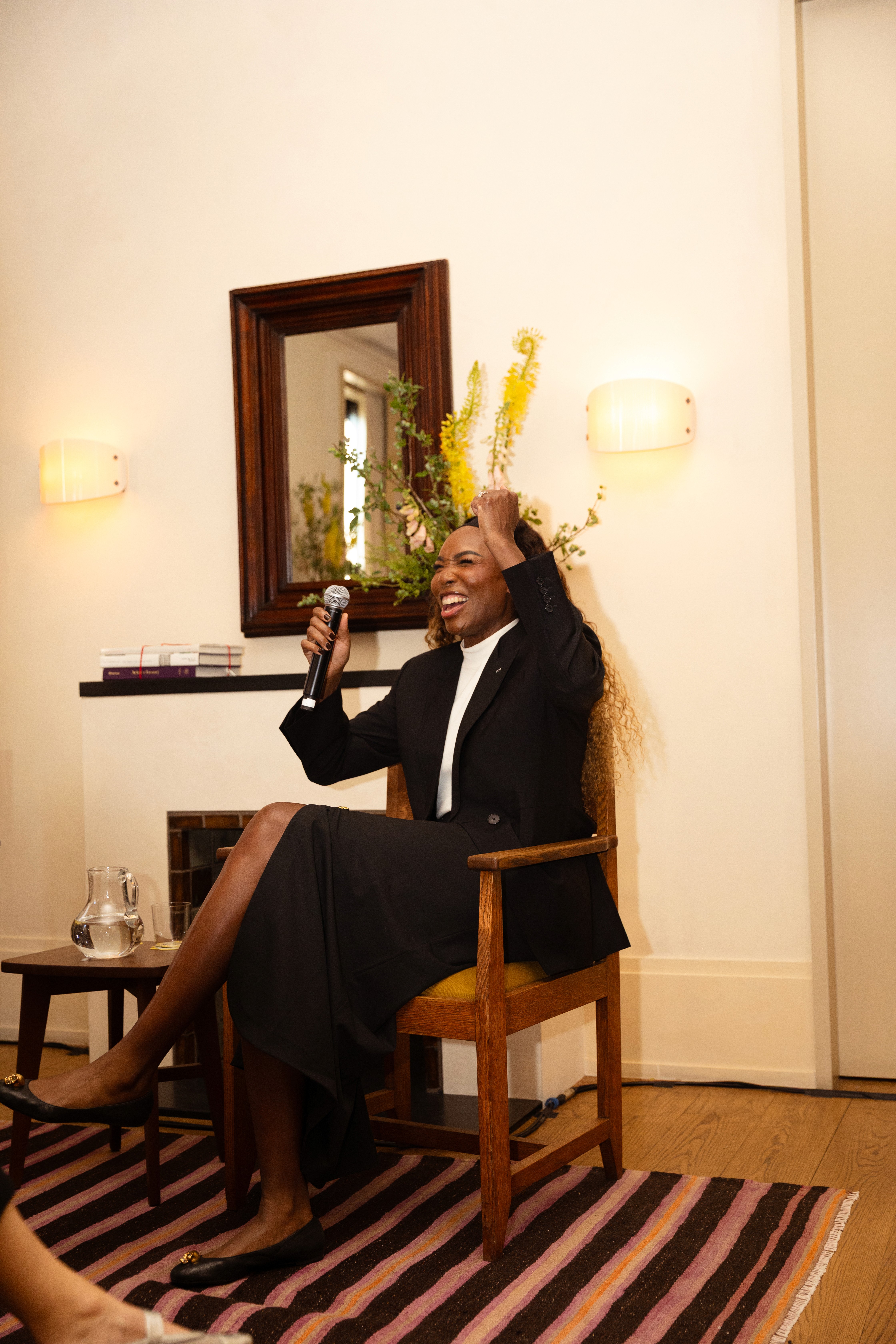
On June 15 in New York City, Her Counsel held its first U.S. event: a gathering of women shaping the future of law, brought together not for panels or presentations, but for conversation. The room included women at every stage of their careers across private practice, in-house teams, and legal innovation.
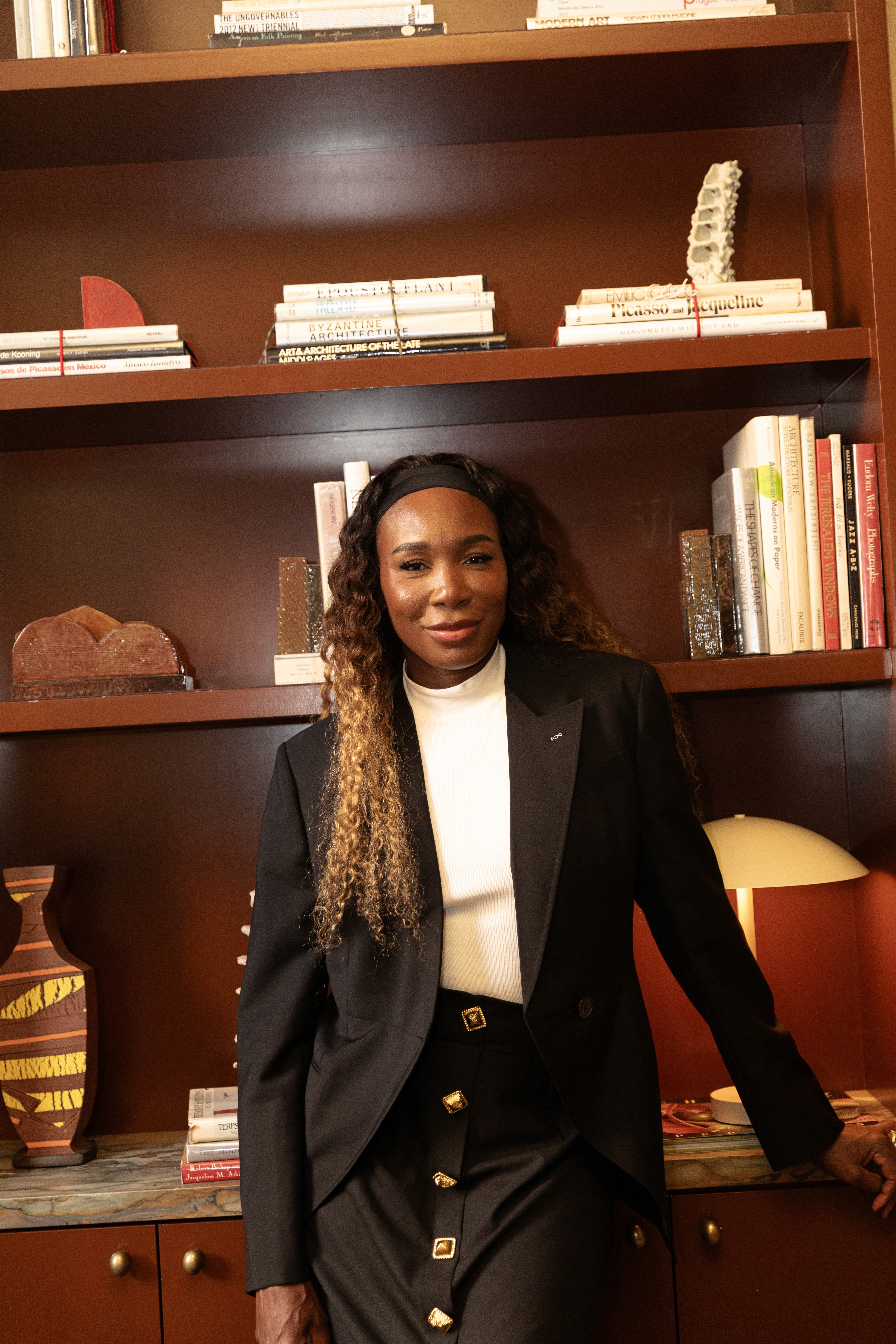
At the center of the evening was Venus Williams — seven-time Grand Slam champion, entrepreneur, investor, and decades-long advocate for equal pay and opportunity. Venus knows what it means to fight for equal value in a system that wasn't built to measure it. And she knows that it takes to play the long game — the resilience, the reinvention, the choice to keep going when many would have stopped. For a room of women navigating exactly those experiences in law, hers was a voice that spoke directly to them.
Women now represent over 40% of all attorneys in the United States. More than half of all associates are women. By the numbers, the pipeline looks healthier than it ever has. And yet the higher you go, the harder the data is to read with optimism. Women hold just over a quarter of equity partnerships. Less than a third of all partners are women. Just over 5% are women of color. Progress at entry is not the same as progress at the top, and that gap is precisely the space Her Counsel exists to fill.
The fight for what's right
Whether Venus was talking about inequality, Wimbledon, or her health, one principle threaded through everything: a refusal to let anyone else dictate the terms she lives by. “No matter what the situation, I just believe in living life on my own terms,” she said. “And even if the terms don't happen today, even if the loss is today, I just feel like my terms have to happen. I'm going to keep going until I can live on my terms.”
That quality has a name, at least among her sisters. They call it ‘what would Venus do?’ — a phrase that captures something specific: a quiet, immovable firmness that doesn't raise its voice but doesn't budge either. Her sister Isha, in the audience, explained it simply: “Venus is quiet, but extremely firm. She doesn’t let anything slide.”
It's the same quality Venus brought to Wimbledon in 2006, when she made the case that the tournament's prize money should be equal. But her deeper reflection was on what it takes to shift culture, not just policy. When Zeynep pressed on the gap between winning the argument and winning the culture, Venus was clear: “Culture is a thing that either you agree to be a part of, or you don't.”
“There were a lot of men who didn't agree that we should have equal prize money. They self-selected out. But that didn't mean we couldn't achieve what we wanted to achieve, and we did. Those same men have mothers, sisters, daughters. They had no idea what they were saying, no idea of the ramifications on the people they love. They were condemning them to inequity.”
A family built on conviction
When asked where this conviction comes from, Venus spoke about her family and the upbringing that shaped her mindset: “We grew up in this kind of renaissance house,” she said, describing a home full of learning, big thinking and wide-ranging conversation.
Her siblings were taught “what's in your head, nobody can take away from you.” She explained: “The ability to take care of ourselves, to be confident and independent — all of that was critical for us.” Their mother, in particular, always told them to “stand up for what's right, even if it's not easy. We all got that from her.”
That same spirit extended to how she thought about her sister's career. Despite competing directly against Serena, the wins never felt separate. “Her wins were my wins. Our wins should be each other's wins, because there's enough room for everyone to win when you start to think about it. Seeing her winning helped me see myself better — what I wanted to do better, how I wanted to improve. I got motivation just from her doing well.”
She also mentioned her father’s philosophy of putting education first: “He was born in 1942 in Louisiana — as a Black man, there were no opportunities. He had a dream of being an entrepreneur, working for himself — things that generations before him never had. And my mom's family was from Mississippi; she was born in '52, they went north for opportunities, she was the first to graduate in her family. They wanted us to have more. So education was hugely important. Knowing who we were off the court — that was important too.”

Advocating for yourself
Midway through the evening, Venus set aside the prepared questions to share something more personal that she felt the room needed to hear.
She had recently been diagnosed with adenomyosis — a condition she had never heard of until she came across it on Instagram, recognizing herself in every symptom listed. For years, doctors had told her what she was experiencing was normal, that she was getting older, that there was no particular cause. In 2016, she played a Wimbledon doubles final in severe, unmanaged pain. Eventually, by 2024, she had quietly stepped back from tennis entirely. A secret retirement, she called it.
This came on top of Sjögren's syndrome, an autoimmune disease she had already lived with undiagnosed for years — dismissed by doctors. It was from that illness that her most talked-about comeback came: back to the tour, back to the Wimbledon final. “I couldn't let that stop me or break me or decide for me,” she said. “I wanted to decide for myself.”
With the adenomyosis, the fight was different — wrong diagnoses, a specialist who told her she was inoperable, years of prescription painkillers just to function. Then the right surgeon, the right diagnosis, the surgery. She urged every woman in the room to learn what she had not known earlier — what endometriosis is, what fibroids can do, what adenomyosis means — and above all, to push back when doctors reach for an easy explanation.
“Women don't know enough about our own bodies,” she said. “I didn't know how to advocate for myself. I didn't know I had something wrong until Instagram told me. All we have is our health and our lives. If we don't have that baseline, we can't go up from there.” For a room of high-achieving women accustomed to pushing through, it was a rare and necessary reminder to listen to your body.
Reframing pressure and hopes for the next generation
When asked about pressure, she explained how her relationship with it was defined early on. “I was in the public eye at a very young age, and I think when someone's watching, when there's any kind of pressure, it's always been about staying focused on what I wanted to accomplish and drowning out the noise. Constantly drowning out the noise. Almost developing this attitude of, ‘I really don't care what anyone else thinks’ — being quite brash. I had that superpower from a young age.”
She spoke about teaching herself to see pressure “as a privilege” by “tricking your mind to say that this is exactly where you want to be.” Pressure isn't something to manage, she explained, but to lean into. “Being under pressure means I'm achieving something great,” she said. “It means I'm in a position to do something amazing.”
She was also asked what she hopes the next generation can simply take for granted. Too many girls, she said, leave sport not because they lack talent, but because of how they're spoken to — coaches who tell them to lose weight, environments that judge a strong body rather than celebrate it.
Women before her, from Althea Gibson to Billie Jean King, spent so much of their careers fighting battles that should never have been theirs to fight. Billie Jean King probably would have won more titles if she hadn't had to, Venus pointed out. “But look at her legacy,” she said. “She just wanted to play, and she did something greater.”
The hope, she said, is that the next generation can just play, and if they choose to do something greater, let it be a choice, not a necessity.
A life with no regrets
What Venus kept coming back to, across equal pay, health, entrepreneurship, pressure, and everything in between, was the importance of integrity and authenticity. “I have this policy of living in truth. I want to live a life with no regrets. That doesn't mean there are no mistakes. It just means I gave it all and went for it. I firmly believe that if you live in truth, you'll get to where you're supposed to be.”
“There's always a risk of failure,” she said. “But many times failure doesn't mean you can't do it again, or start again and learn from it. I see men making asks all the time — they're not afraid to keep at it.”
And when asked what drives her advocacy, across health, equal pay, and everything in between, her answer was simple: “Empathy and passion for making sure nobody else goes through what you went through.”
That is the spirit Her Counsel carries forward, from city to city, and now, for the first time, to New York.

Sources: (1) RPJ Law, Women in Law: Progress, Challenges and the Role of Women-Owned Firms (2026); (2) Law360, The 2024 Women in Law Report; (3) 2Civility / NALP, NALP Diversity Report — Signals Fluctuations as Fewer Firms Provide Data (2024); (4) NALP, Report on Diversity in U.S. Law Firms (2024–25).