Grant Thornton UK’s Forensic and Investigation Services team regularly works across borders, under pressure, and with data sets that continue to grow dramatically in scale and complexity. Clients expect clear, defensible insights and they need them fast.
By embedding Legora across its forensic workflows, Grant Thornton has augmented how its team navigates large volumes of data, enabling investigators to spend more time on the judgment-intensive analysis that defines exceptional client work.
With Legora, Grant Thornton:
Enhanced document review with AI-assisted analysis across email, contract, and multi-language data sets
Embedded Legora into the team’s established, practitioner-led review process, helping to surface inconsistencies and contradictions for review – supporting, not replacing, professional judgment
Enabled the team to get to judgment-led inquiry earlier in each project, supporting the quality and robustness of insights delivered to clients
The challenge: scale, speed, and the demand for rigor
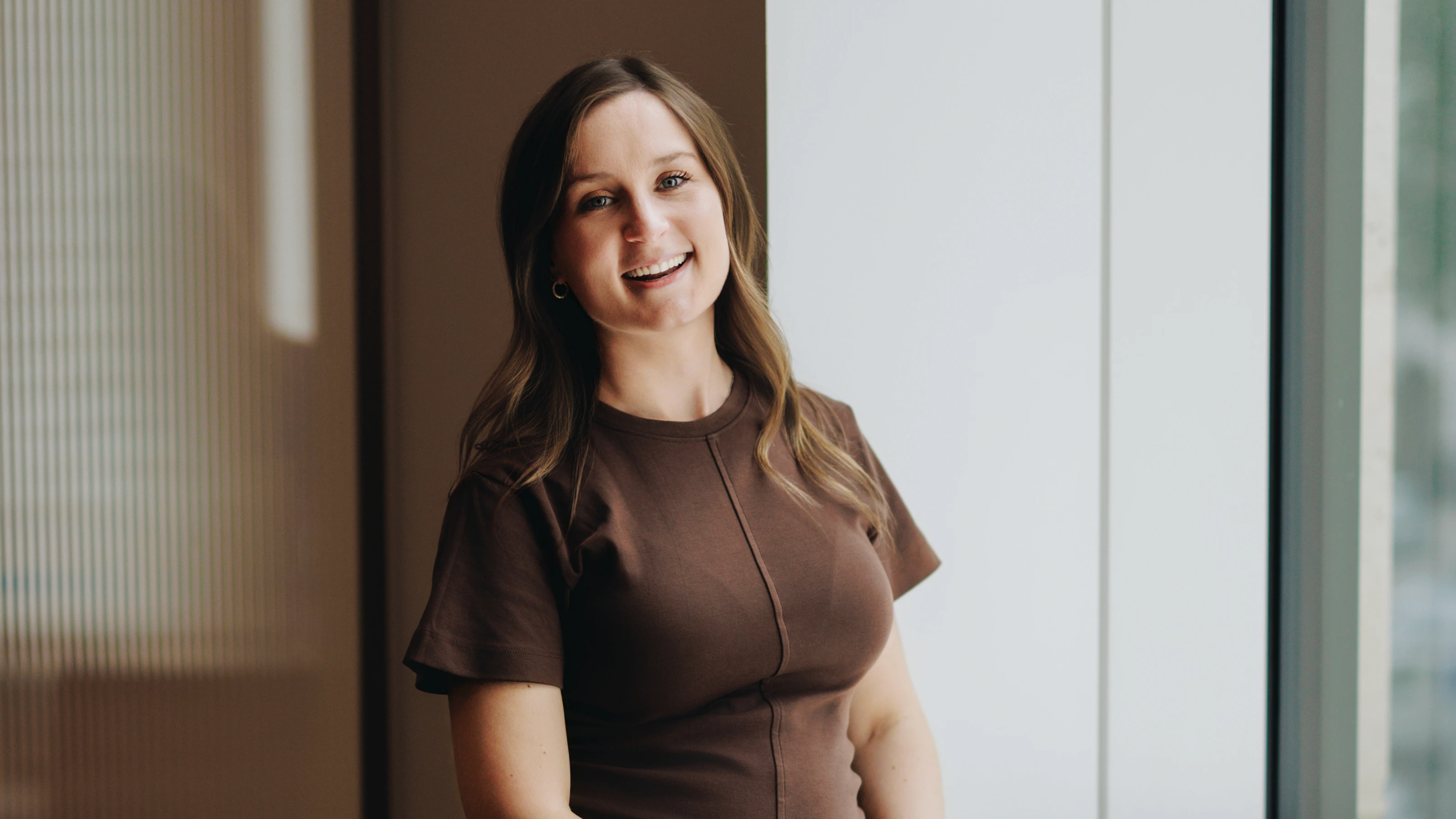
Forensic and investigation work has always been data-intensive. But for Kathryn Karssiens, Director in Grant Thornton UK’s Forensic and Investigation Services team, the challenge has shifted considerably over the course of her career. “The volume of data that I'm seeing now versus back then is massive. It's such a big change,” she explains. “Data sets have become more international and timelines have become tighter.”
In practice, this created a compounding set of pressures. Large volumes of documents – such as emails, contracts and other records – needed to be reviewed quickly and accurately, often across languages, and always to the standard that high-stakes forensic work demands.
Before Legora, the team already used sophisticated e-discovery and review technologies to manage large datasets. The challenge was not accessing the information but understanding it quickly. The team often spent significant time familiarizing themselves with unfamiliar data; foreign-language documents drew on colleagues with the right language skills or trusted external translators, and contract comparisons involved detailed side-by-side analysis.
“It was a thorough process,” Kathryn says, “but it was time-intensive and fairly dependent on specialist resources being available.”
The result was that a significant portion of every project was spent simply getting oriented before the team could move on to the higher-value work of interpreting findings, applying professional judgment and helping clients make informed decisions.

From pilot to practice
Kathryn arranged a demonstration of Legora with a few colleagues. “Everyone that used it could immediately see how it would take the heavy lifting out of the process,” she recalls. Following a pilot phase that ran across several teams within the forensic practice, Legora was adopted more broadly.
Translation became one of the most significant use cases early on. Rather than coordinating internal resources or engaging third parties, the team now runs multi-language document sets through Legora directly, handling a range of languages and feeding reliable outputs straight into the review process.
On one project, the team needed to translate a set of foreign language documents as part of a broader review. Previously, this would have involved drawing on colleagues with the right language expertise, getting them set up on the project, and absorbing the delay. With Legora, the team was able to generate an initial translation quickly, before carrying out a quality check to validate accuracy and context. This meant they could move into the analysis phase earlier, while maintaining the same high standards of review.
Across multiple projects since, the team has used Legora to translate documents from a variety of languages into English, with outputs reviewed as part of the overall quality assurance process – consistently supporting a more efficient workflow. For email analysis (where a structured e-discovery setup is not required or is undertaken later in the project), the team uses Legora to generate structured summaries in a tabular format, producing a matrix that captures sender, recipient, date, and a concise summary of each email's content. “That can be really useful, particularly at the start of a case when we're trying to get to grips with all the information very quickly,” Kathryn says.
Contract review is handled the same way. Where the team previously worked through different versions of a document side by side, manually tracking changes, Legora now processes those variations and surfaces the differences directly.
In another instance, Legora quickly flagged a date in a report that was inconsistent with the documented timeline, highlighting that the event being referenced could not have occurred at the time stated. In forensic work, where the accuracy of a timeline can be central to the conclusions drawn and the credibility of the entire report, that kind of error carries real weight.
Legora's ability to cross-reference in this way, drawing on the knowledge embedded in the report itself, surfaced the inconsistency to the reviewer earlier in the process, complementing and supporting human review.
The team has also integrated Legora into its broader quality assurance process. Forensic work at Grant Thornton already follows a rigorous, multi-reviewer QC approach, with Legora now sitting alongside this as an additional layer – providing an extra set of eyes to support, but never replace, human review. “What we found is that it has been very good at helping to surface inconsistencies,” Kathryn explains, “especially in long reports where maintaining absolute consistency is critical.”
The result: sharp and robust analysis
The most important shift Kathryn identifies is not only in the speed of delivery, but in the quality of what the team can now do with its time: supporting sharp, robust analysis for clients.
“We don't start from zero in the same way anymore,” she explains. “Legora helps us build an earlier understanding of the material, so we can focus our expertise where it matters most.”
That shift creates real capacity for deep work. “Legora takes on the heavy lifting so we can spend more time validating our conclusions and really sense-checking what we're seeing,” Kathryn says. “This enables us to focus more on the parts of our work that require judgment.”
For a practice where every output goes through rigorous QC and clients are relying on defensible conclusions, that depth supports strong work.
What has changed is that the team is able to begin its analysis earlier, focusing more time on careful, judgment-led inquiries.
“We're able to spend less time on repetitive, process-heavy tasks and more time on interpreting what we're seeing and thinking carefully about what it means,” Kathryn explains. With the team applying critical thinking and reviewing Legora's outputs carefully, she sees the tool as something that enhances professional expertise rather than substitutes for it.
Developing the next generation of forensic professionals
As junior team members take on more judgment-based work earlier in their careers, the expectation is that the depth of expertise across the practice will continue to grow, supporting continued high-quality delivery to clients. The shift toward judgment-based skills earlier in a career, Kathryn believes, will increasingly support faster progression across the profession.
For Kathryn, this is where the real value of Legora lies: "It's all about augmenting what our people do so that they can work smarter and deliver the consistently high quality that we’re known for. Legora is a fantastic tool that supports our people to do their best work."