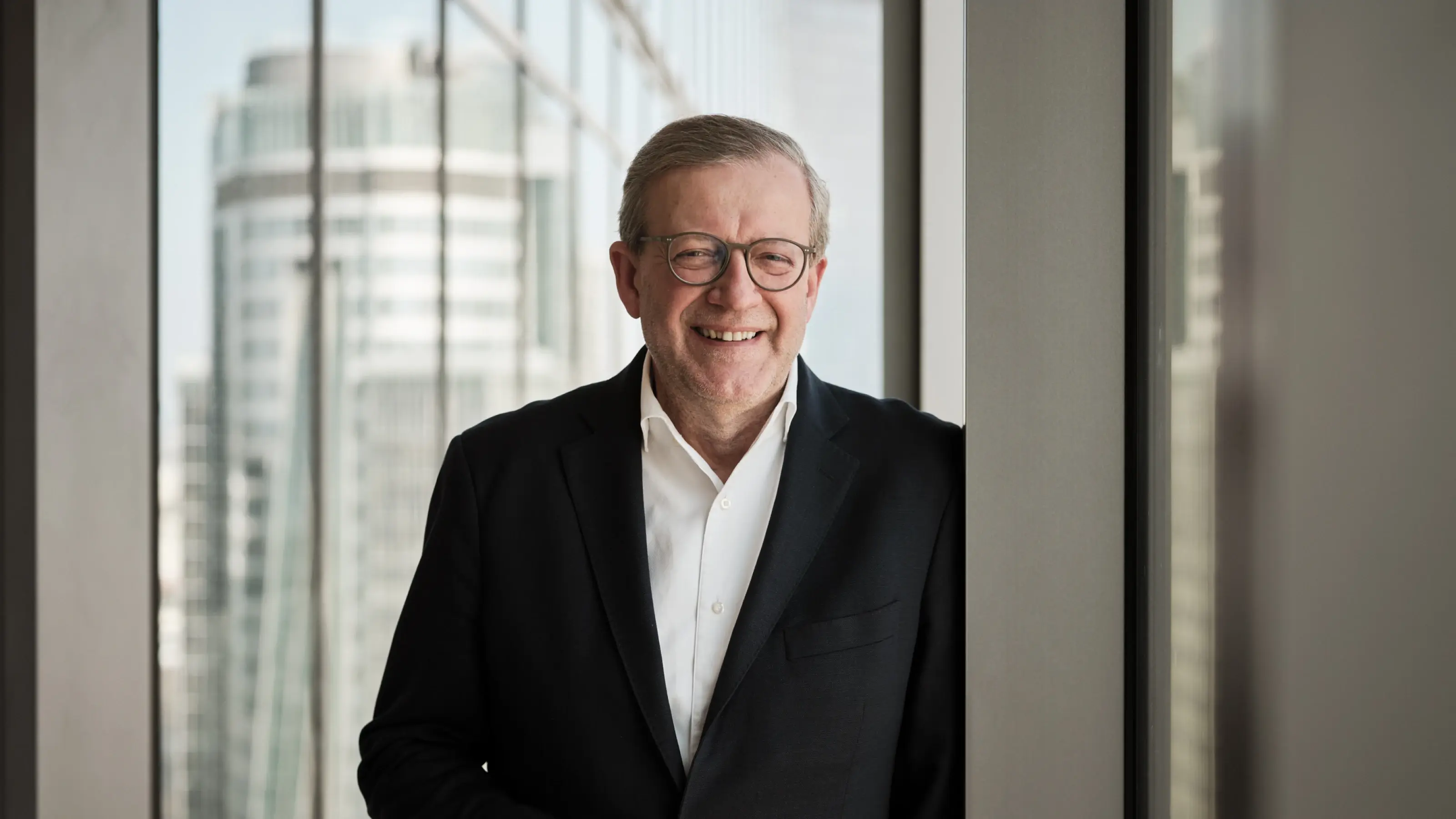
After decades as General Counsel at global organisations including SABMiller and Asahi, Waldemar Koper has seen the legal function evolve through major structural moments.
Today, as President of Polish General Counsel Association (“PSPP”), Waldemar Koper sits at the center of another transformation, one that is moving faster than anything before it.
“Without proper adoption of AI tools, we cannot work effectively, and most importantly, in line with business expectations,” he says. That framing sets the tone for PSPP’s partnership with Legora. To help an entire community of in-house lawyers understand how their role is changing, and how to respond to it.
From representation to a platform for change
PSPP was originally created to address a gap. Fifteen years ago, in-house lawyers lacked the same level of representation and collective voice as their counterparts in private practice. The organisation brought together general counsel and senior in-house lawyers to rebalance that dynamic.
Since then, it has grown into a network of more than 500 general counsel across sectors, but its role has expanded beyond representation. At its core, PSPP now functions as a platform that enables dialogue, shared learning, and, increasingly, collective navigation of new challenges.
“We facilitate dialogue among general counsels,” Waldemar explains, “because we share the same pressures, the same kinds of problems in day-to-day work.”
That shared reality matters. In-house lawyers often operate in isolation within their organisations, but they face strikingly similar demands: increasing pressure from the business, growing complexity, and now, the rapid introduction of AI. Having a space to compare approaches, test ideas, and exchange best practices is no longer a ‘nice to have’. It is becoming essential infrastructure.

AI and the repositioning of legal
What makes AI different from previous waves of legal technology is not just what it does, but what it enables.
“Yes, the speed is striking”. Waldemar describes it as “absolutely fascinating.” But the real impact is what that speed creates space for.
The ambition, as he sees it, is not simply efficiency. It is a reallocation of effort. Routine work, research, first drafts, and comparisons, can increasingly be handled by AI. What remains is higher-value work: judgement, strategy, and decision support. That shift is already changing expectations from business stakeholders. Legal teams are being asked to interpret the law, and also to advise on outcomes.Waldemar expects that dynamic to accelerate:
“Business leaders will come prepared with basic legal knowledge. They will want to talk about consequences, options, and recommendations.”
In that environment, the role of the general counsel becomes more central, not less. Legal moves closer to the core of decision-making, supported by both external counsel and AI tools.
“Corporate legal departments are really in the center of the business at the moment,” he says. “It’s a revolutionary change in how we operate.”
Why in-house adoption is more complex
Despite the momentum, adopting AI inside corporate legal teams is not straightforward. Law firms, to some extent, share similar operating models. In-house teams do not. They are shaped by the businesses they sit within, whether that’s banking, FMCG, or industrial sectors, each with its own systems, risk frameworks, and internal processes. That variation makes a one-size-fits-all approach impossible.
“AI should fit real needs of companies,” Waldemar says. “It should not be simply embedding new technology, it must fit people, systems, and processes.”
This is where PSPP sees a clear role for itself. As a platform connecting hundreds of general counsel, it can surface patterns, highlight differences, and help translate between technology providers and real-world use. As well as showcasing tools, PSPP can help organisations understand how to adopt them meaningfully.
Trust is the real barrier
For all the potential, the concerns from general counsel are consistent. The most immediate is trust. “If you are misled by AI, it can dramatically affect your trust in such tools,” Waldemar says. In practice, this is not an abstract risk. Legal work often happens under time pressure, board meetings, urgent decisions, incomplete information. In those moments, there is limited opportunity to verify outputs.
“Sometimes you have 30 minutes, the board starts, and you need an answer.”
As a result, most teams are currently operating in a hybrid mode. AI is used to generate initial outputs, but those outputs are still checked against traditional sources. It is an interim phase, one where the value is clear, but full reliance has not yet been earned. Even so, the balance is already tipping.
“In most situations, it is very useful,” he notes. The direction of travel is not in question.

Transparency, responsibility, and the human role
If trust is the barrier, transparency is what enables it. Waldemar sees this playing out on several levels. Internally, business stakeholders want clarity on how AI is being used. Externally, clients expect honesty about how work is produced. Structurally, organisations need confidence in how sensitive data is handled.
“Without transparency, there cannot be trust,” he says.
But transparency is only part of the equation. The other is responsibility. One of the risks he observes is over-reliance, treating AI outputs as final without sufficient review. That, in his view, undermines both quality and professional accountability.
“It should still be my own work, supported by AI, not replaced by AI.”
This balance, between efficiency and ownership, is becoming a defining feature of modern legal practice.
A partnership designed for the long term
Against that backdrop, PSPP’s partnership with Legora is deliberately structured as something more than a typical vendor relationship. Waldemar describes it as a long-term collaboration, focused on mutual benefit rather than short-term outcomes.
“It’s not a promotion of a product. It’s not a one-year partnership. We think long-term.”
For PSPP, that means opening access, helping its members understand how AI works, what it can do, and how to use it responsibly.
“We need to open the gates to the AI world,” he says, “because most people don’t know how it operates.”
For Legora, it means something equally valuable: direct insight into the day-to-day realities of in-house legal work.
“Legora can count on insights from our community, their real needs from daily work.”
That exchange, between those building the tools and those using them under real pressure, is where the partnership finds its depth.
What success looks like
Success, for PSPP, is about capability across its community: understanding, confidence, and the ability to engage with AI in a professional and informed way.
“Increased understanding of how AI operates among our members, that will be success.”
There is also a broader ambition: to strengthen PSPP’s role as a platform for shaping the future of the profession.
“Being a place for discussion about the future of legal, supported by new technologies, that is also a goal.”
The divide that’s emerging
Looking ahead, Waldemar sees a clear divergence forming. Not between those who have access to AI and those who do not, but between those who adapt how they work and those who don’t.
“Some people will do the work by Monday. Some will do it in one hour. That difference cannot be beaten.”
The comparison he draws is personal. He reflects on his father, also a lawyer, working from paper books in the 1980s. It worked, because it had to. But today, choosing not to use AI feels similar. Possible, but increasingly out of step with how the world operates.
“We don’t have the opportunity to think in a different way,” he says. “We need to jump into the train.”
Closing
For PSPP, the goal is not simply to help its members keep pace with that shift. It is to ensure that general counsel help define it. Through its partnership with Legora, that means creating a two-way exchange: opening access to AI, while bringing the realities of in-house legal work directly into how those tools evolve. Because the future of legal technology will be shaped by the lawyers who choose how to use it.