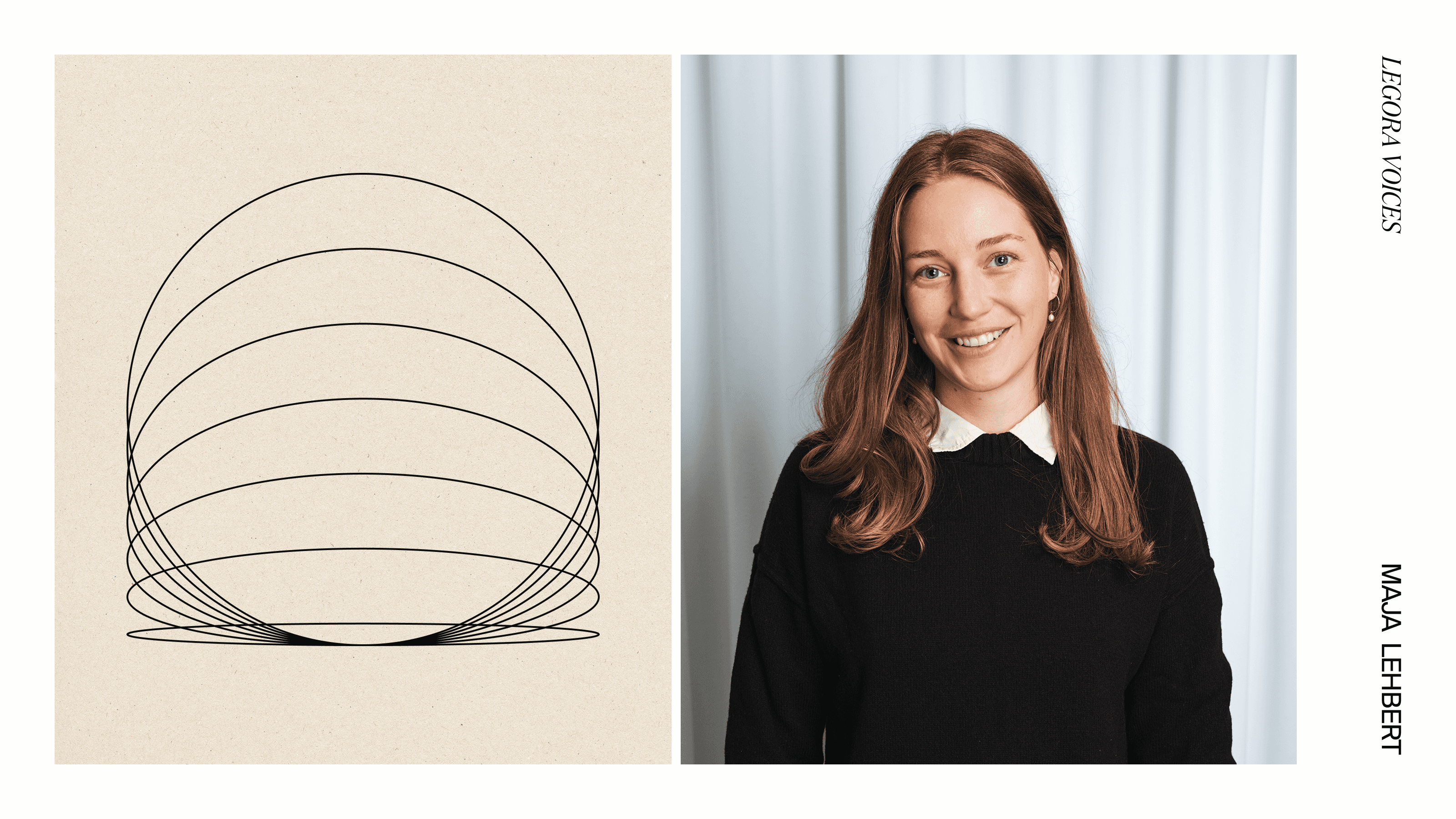
When Maja Lehbert joined Legora in 2025, the company already had a rapidly growing global customer base - but no centralized support function. Maja saw a unique opportunity to build and lead a Customer Enablement team that’s fast, responsive, and deeply human.
From ad hoc to enablement
Maja began her career in customer service - directly handling every customer request, end to end. But what drew her into this world was fixing the systems behind the scenes. That instinct led her into process management and product ops, where she built scalable support functions at other tech start-ups from the ground up.
At Legora, she found something exciting: a fast-growing company with an active user base, and the opportunity to create a specialist customer support function from the ground up. “There was real momentum - smart people solving customer issues every day,” she says. “My role was to turn that into a dedicated function that could scale without losing the personal touch.”
Building human-first support
Maja leads the Customer Enablement team at Legora, which is distinct from Customer Engagement. It’s not focused on account management, but on delivery, tooling, and direct user support - for the lawyers and IT teams who rely on Legora every day.
But for Maja, that structure is only part of the story.
Where many companies lean hard into automation, her approach starts with something simpler: human connection.
“It’s about using AI where it helps” she says, but making sure there’s a real person behind it. Someone who listens, follows through, and treats the issue with care.”
One of Maja’s first moves was to take over the existing support channel and turn it into a direct line to subject-matter experts. Removing the need for requests to be triaged through account teams. The response was immediate. Requests came in fast. Issues were resolved quickly. And, over time, something unexpected happened: users started referring to support agents by name.
“In enterprise software, that kind of familiarity is rare,” she notes. “But it matters. It means people feel comfortable coming back. That’s when support becomes a relationship.”
Co-creating solutions
Legora’s Customer Enablement team responds to issues as they happen, but it also co-creates solutions. The team works with everyone from IT departments at global firms to lean startups with no dedicated tech staff. They help integrate with SharePoint, IManage, SSO, and even contribute to future product development.
“We own a lot of the delivery ourselves,” Maja notes. “We’re deliberately attracting and hiring engineers who want to work this way - people who love being close to customers. That says a lot about the kind of team we’re building.”
For Maja, success is measured by the strength of the relationships built. “When customers come back with new questions, that’s a sign of trust,” she explains.
That mindset isn’t always common in support functions. But it adds a meaningful layer of quality - and it’s one of the things Maja values most about working at Legora. “When it makes sense, I’ll jump on a call and troubleshoot with customers directly,” she adds. “It’s more collaborative. Sometimes it feels more like coaching than support.”
Maja’s team is growing fast, with plans to expand regionally and support both SMBs and global enterprises. But Maja emphasizes that the culture won’t change. “We’re not a team you only throw emergencies at. We’re embedded deep into the business strategy - the core of how Legora works.”
Scaling without losing touch
As the customer base grows, so does the ambition: to offer dedicated, recognisable support teams for key clients. That means hiring carefully - not just for skill, but mindset. “It’s about making time to really interact with customers,” Maja explains. “You can teach product and technical skills. But you can’t teach someone to genuinely care - to listen, and to connect.”
Her vision is clear: regionally distributed teams, clear ownership across customer accounts, and a consistent, human-centred experience - at any scale.
Maja and her team are showing what it looks like when customer support moves beyond resolution - toward something embedded, strategic, and deeply human.