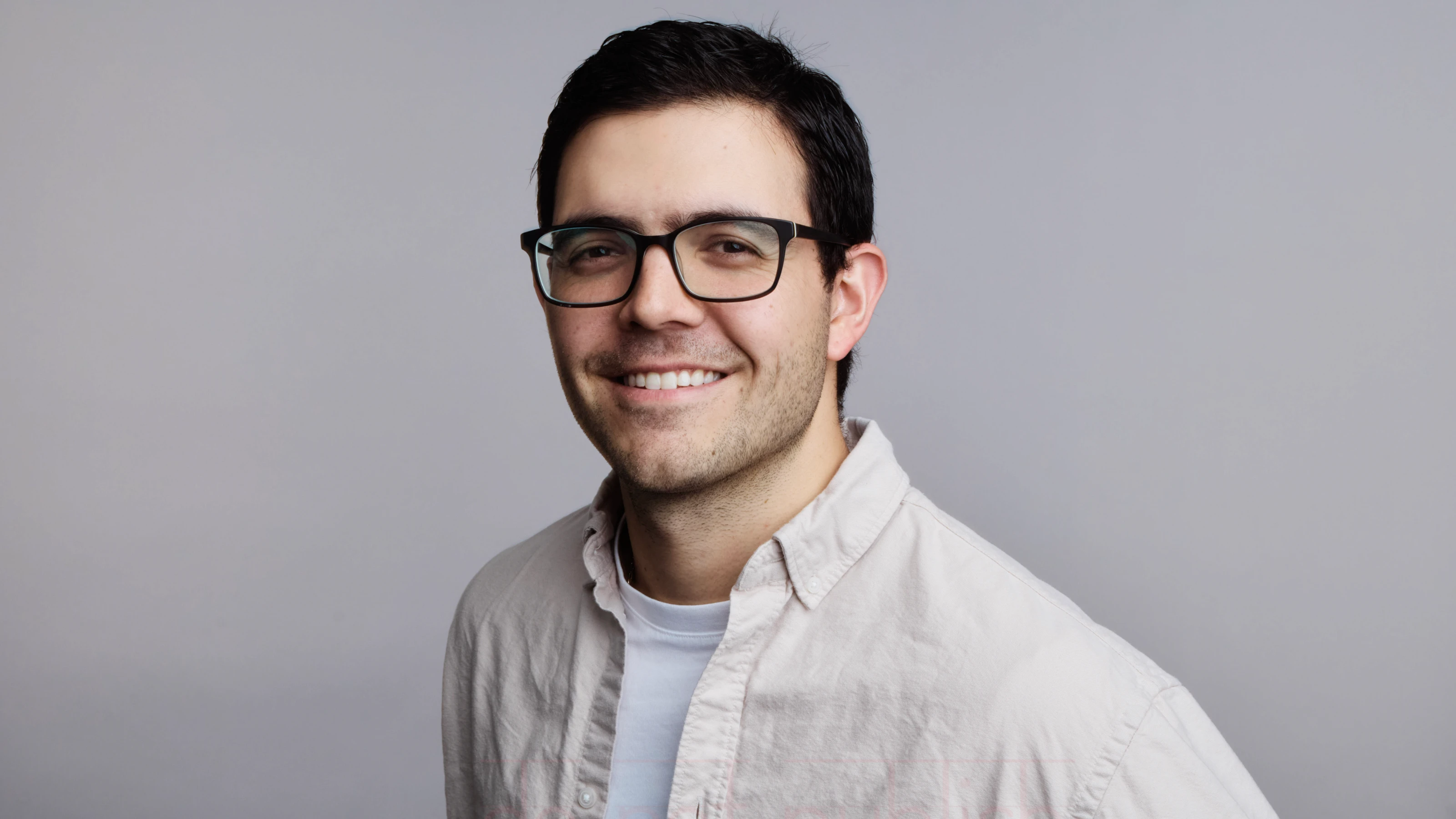
Having worked as a lawyer, a client, and in legal technology, Ricardo Anaya was unusually well prepared for what he does today: translating legal workflows and judgment into effective ways of using Legora. That discipline has become known as legal engineering, and Ricardo was ideally placed to help establish it for Legora in the US.
He studied law at Universidad del Pacífico in Lima, graduating top of his class, and worked at Baker McKenzie and PwC before landing an in-house role in private equity. But it didn't take long for frustration to set in. The work was repetitive and manual, and it rarely delivered the impact he'd gone into law to make.
So he moved sides into investing. Within five months of joining Nexus as legal counsel, Ricardo had taught himself the investment business and earned a place on the deal team as the first lawyer in the firm's history to make that jump. He went on to become founding CFO of Olimpo, a sports betting business Nexus built from inside the fund. Then came Stanford where he earned an MBA. This was followed by a role at Responsiv AI, a legal AI company focused on regulatory compliance.
"By the time I came to Legora, I'd been the lawyer, been the client, and worked on the product side," he says. "That's basically the job description for a legal engineer, though nobody called it that yet."
Employee number seven in North America
Ricardo joined Legora as the founding legal engineer for the US and became Lead about six months later. He was employee number seven in Legora's New York office, and roughly the 80th hire at the company globally, joining at a moment when there was no US legal engineering function and no playbook. This meant there was no local precedent to work from.
A blank slate might seem intimidating, but Ricardo didn’t see it that way. "The appeal was that there was nothing here yet,” he explains. "Expanding from the ground up, in the largest legal market in the world, was exactly the kind of ambitious problem I wanted to be part of."
Legora now has over 250 employees across the US and works with more than 100,000 legal professionals globally, a scale that makes those early days feel a world away.
"I have never worked anywhere with this concentration of genuinely brilliant colleagues," he says. "The culture has a mix I hadn't come across before. Real competitiveness, paired with kindness and a default to helping each other. People want to win, and they want the person next to them to win too."
The launch he's proudest of was at an AmLaw 50 firm, a project he steered from pilot through to implementation. From a standing start, more than 1,000 lawyers were using the platform within three months, with weekly active users above 70% of the licensed base.
The generic workflow problem
Ricardo’s biggest learning so far is that no firm works quite like another, however similar they may look from the outside. Two firms running the same deal type will structure it differently and rely on different precedents. Even what counts as a good first draft varies from one firm to the next. A generic workflow can be technically correct, and still go unused.
"The fix was to stop building for the practice area and start building for the firm," he says. His team introduced use case discovery sessions as the first pillar of every rollout. "The first step is to understand how a firm actually does the work, where the judgment sits, and what they would never automate." From there, his team works around how the firm actually operates.
This approach has a further payoff. The discovery sessions also identify the AI champions inside a firm. The people who get excited in the room are the ones who carry the rollout forward.
Teaching the work, not the tool
Understanding a platform and actually using it are two different things. Early on, Ricardo's team kept hearing the same thing. Training went well and people understood the platform, but then they went back to their desks and didn't use it. "The gap wasn't knowledge," he says. "It was that we were teaching the tool, not their work."
So his team added a stage before training. Each practice area nominates champions, who identify the use cases their lawyers care about. Sessions then focus on just the top four or five. The first trial resulted in close to 500 weekly power users within three months.
"Most adoption problems are diagnosis problems," he says, "and diagnosis doesn't happen over video. That’s why we go to them. Meeting lawyers where they are is a critical part of the job."
Why New York
New York is Legora's US hub for a reason. "That's where the lawyers are," Ricardo says, simply, "and it's the same story with the in-house teams we work with. It is a matter of density." A day can include breakfast with a knowledge officer, an afternoon in an attorney's office watching how they actually work, and an industry event in the evening.
"I spend more time at our customers’ offices than my own," he says. "Being one call away isn't enough. I'd rather be on site, building the kind of rapport that lets you work through a problem with a customer rather than just report back on it."
"The people who do well have three things," he says. "Real legal credibility, because you need to have felt the pain points to understand the workflow and how to improve it. Genuine curiosity about the technology, not just tolerance of it. And energy from customers, because this is a customer-facing role and a good amount of the work happens in other people's offices, solving other people's problems. The ones who thrive find that energizing, not draining."
Measuring what matters
Ricardo is now a senior leader within the North American legal engineering function that has grown substantially since he joined, with no signs of slowing down. The team are all former practicing lawyers, from firms including Latham & Watkins, Cooley, and Kirkland & Ellis, with law degrees from Harvard, Yale, and Columbia.
"We’re focused on adoption and outcomes, not seats," he says. "It's easy to measure how many licenses a firm has bought. What matters is weekly active users as a share of the licensed base, and whether people are doing meaningful work with clear ROI, not just testing a tool."
Asked what he'd tell someone earlier in their career, Ricardo points to what he had to unlearn as a leader. "When you've built something yourself, the instinct is to keep doing it because you're fast at it. That caps the team at whatever you can personally deliver." So he noted down what he knew, then let the team improve on it. That, he says, was the single highest-leverage thing he did last year.
If you want to build with Ricardo, our New York team is hiring: https://legora.com/careers