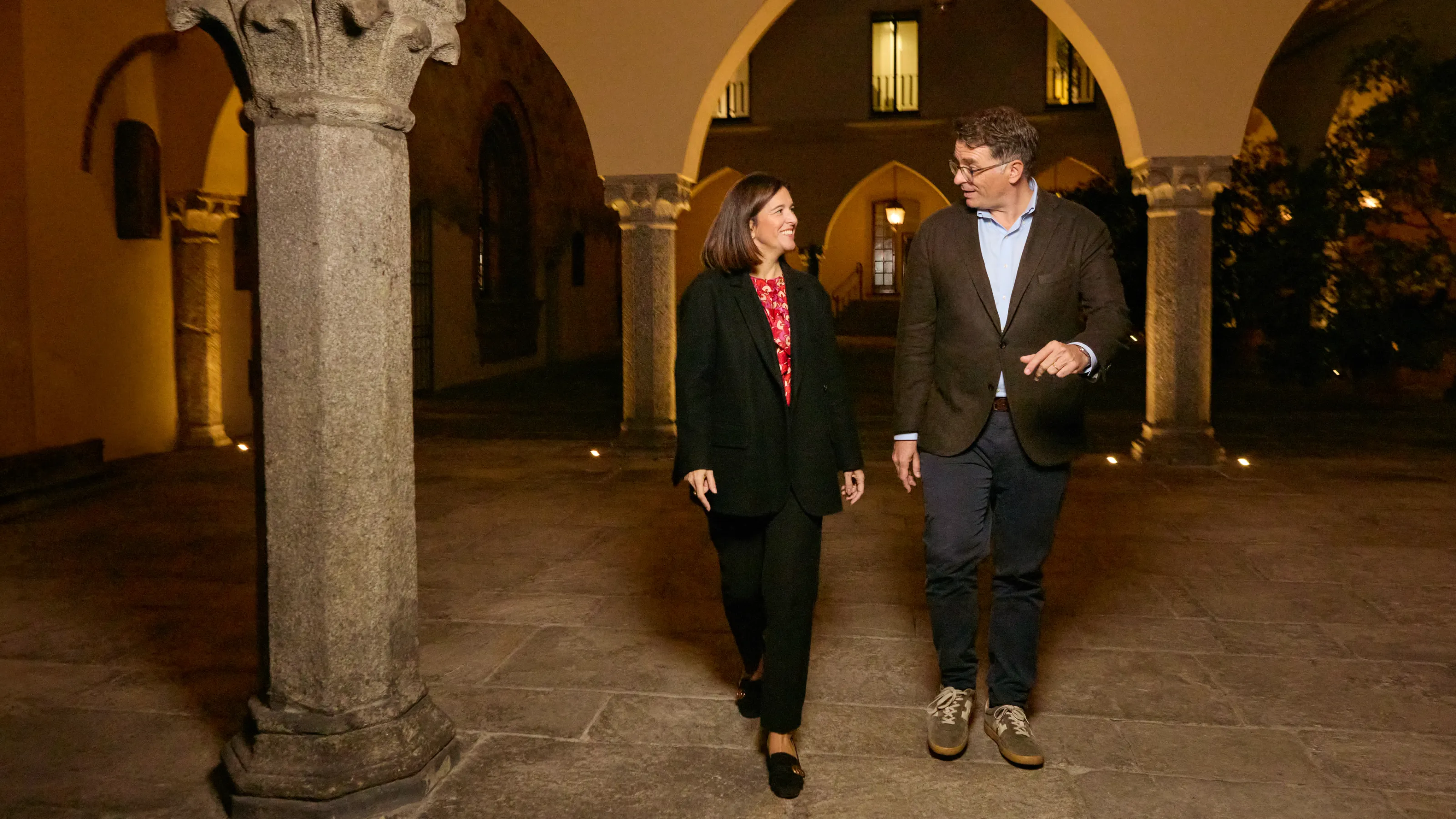
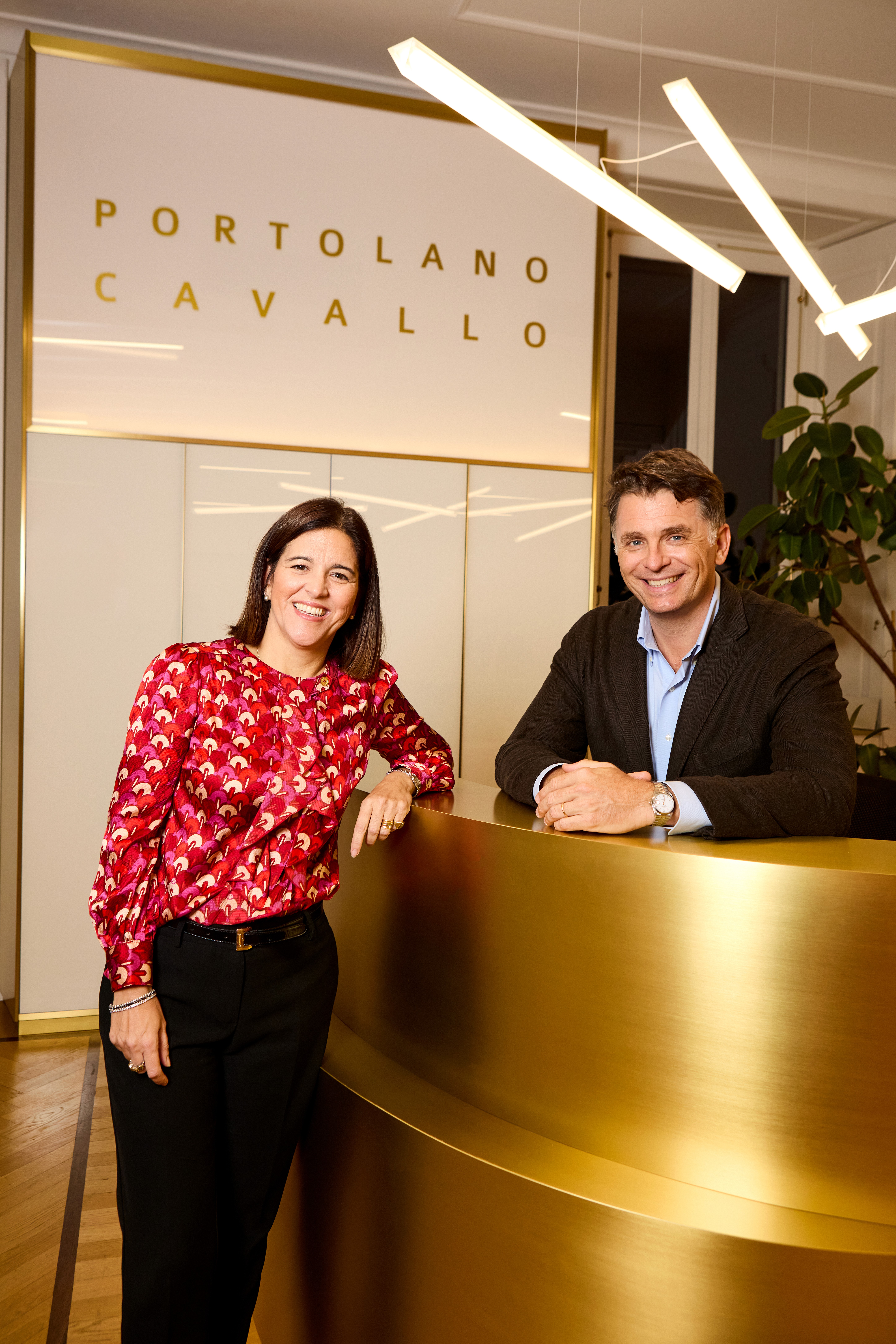
When Portolano Cavallo was founded in 2001, it set out to be something unusual in the Italian market: an independent full-service law firm built around fast-moving, innovation-driven industries and genuinely international work. Today, the firm is recognised as a leader in digital-media-tech and life sciences, and as one of the earliest adopters of AI in the Italian legal market.
At the centre of that story sit Manuela Cavallo and Yan Pecoraro – partners in the corporate and M&A team, and leading Portolano Cavallo’s collaboration with Legora. In this Shapers conversation, they reflect on how they found their way into law, why they chose transactional work, what it means to be a pioneer in Italy’s legal market, and the advice they’re giving the next generation about AI.
What first drew you into law?
Manuela Cavallo: “When I finished high school, I was split between business administration and law. I loved the idea of economics, but when I thought about the lifestyle, it felt more like the path to becoming an employee in a large organisation. I’ve always had a more entrepreneurial attitude. I wanted to invest in myself and build something of my own.
“So I chose law, but I chose business law. For me it was the perfect combination: economics on one side, legal on the other, and the possibility of a professional life that looked more like building a practice than having a job.”
Yan Pecoraro: “My story is less strategic. I applied for both engineering and law. Completely different. The deadline to decide was at noon; at 11:59 I still didn’t know which box to tick.
“In the end, because I came from a very classical education with very little math, law felt like the safer choice. I told myself there’s less math in law. Then, years later, I did an MBA full of math, so clearly I didn’t escape it for long.
“But very early on, I knew I wanted an international component in my career. My family is French and Italian, I've lived abroad, and I've done Erasmus. It was natural to try to build a professional life that would also be international. While practicing law I was always drawn by innovation and I ended up joining the firm’s working group that oversees the selection and adoption of new technologies. Perhaps these are my engineering ambitions resurfacing in the practice of law.”
You both ended up as M&A and transactional lawyers. How did that happen, and what keeps you in that space?
Manuela: “I actually graduated with a dissertation in criminal law, on white-collar crime and corporate criminal liability. My first six months were spent trying to be a criminal lawyer. Very quickly I realised it wasn’t my environment.
“I pivoted completely. I joined a large international law firm and started practising corporate and M&A. That was the moment everything clicked. I loved the combination of strategy, structure, negotiation – and the feeling of building something with the client.
“Looking back, it was always my natural place. It just took a detour through criminal law for me to see it clearly.”
Yan: “During my first year of law school I started working as a clerk in an employment-law firm. It was great to understand how a law firm really works, and to get out of purely academic thinking. But it was all domestic, and mostly litigation. And I realised two things very fast: I wanted something international, and I didn’t want to spend my life litigating.
“When I looked around at what could be both dynamic and cross-border, M&A was the obvious candidate. The pace suited my personality; the deal flow was international; and I liked the idea of helping shape transactions rather than fighting over them at the end. That’s where I’ve stayed ever since.”
What’s the part of transactional work you enjoy most, and what remains the hardest?
Manuela: “The part I enjoy most is project management under the umbrella of the legal framework: managing the deal, managing people, and keeping everything coherent legally.
“To do M&A well, it’s not enough to be a technically strong lawyer. You need to manage the expectations of clients, counterparties, and your own team. You need enough depth in multiple areas, in IP, employment, commercial, and corporate, in order to connect the dots.
“Every deal may look the same but it’s not. The structure can look familiar, but the people are different, the industry nuance is different, the power dynamics are different. I also do a lot of tech M&A, but even within the same sector, every deal has its own psychology.
“Sometimes in negotiation, it becomes a role-play about authority and legitimacy, not just about the legal issues. That can be tough. But it’s also something you learn to navigate, to de-escalate and reset, so that everyone recognises each other’s role.
Yan: “I would echo a lot of that. Two things stand out for me. First, the people. From day one in this profession, I’ve been exposed to very sophisticated, very fast thinkers on the client side, on the opposing side, and inside the firm. That’s a huge privilege.
“Second, it’s not repetitive. Yes, we call things M&A or commercial, but each matter is different because the people and the context are different. I started, as I said, in an environment which was quite repetitive, and I got bored very quickly. In transactional work, I almost never feel that.
“In terms of difficulty, cross-border work brings its own brand of complexity. You’re constantly bridging different legal systems and different business cultures. It’s not just explaining how Italian contract law works. It’s trying to understand where the question is coming from, what the other person’s default assumptions are, and then answering in a way that makes sense in both frameworks.”
Manuela: “And then there’s the energy of transactions. It’s long hours; it can be exhausting. But closing a deal gives you an incredible adrenaline boost. Everyone around the table is tired but grateful, and that energy is very rewarding.
“Even an ordinary issue – a power of attorney that hasn’t arrived for a 9 a.m. closing for instance, can suddenly become the central drama of the night. You get that midnight call saying we have a problem, and you have to say, don’t panic, we’ll figure it out.
“I always remind my team: we are not surgeons. The stakes are high, but no one will die on the table. That perspective lets you stay calm, be creative, and find solutions.”
If you could choose, what is your ideal kind of mandate?
Manuela: “Cross-border deals, without hesitation. Around 80% of our transactions have an international component. We work a lot with US, UK, and French clients, among others. They rely on us to be their trusted advisor in Italy. To explain not just the black-letter law, but how deals actually work here.
“The role of helping a foreign client navigate Italy, and seeing how much they trust your judgment, is one of the most satisfying parts of the job for me.”
Yan: “Same answer on cross-border. I would add that I particularly like deals where, in addition to the legal team, we have direct exposure to the business team.
“Understanding the underlying business goals dramatically improves the quality of your advice. It’s more complex, but also more rewarding.”
Legora: How has technology changed the way you work since you started practising?
Manuela: “I started with fax. It sounds like the stone age, but it’s only 25 years ago. I was sending call notices via fax, standing at the machine. Our current associates have no idea what that means.
“Due diligence was literally done in rooms full of boxes. I once did a due diligence on 5,000 lease agreements – on paper. You took notes on your laptop and flipped through physical folders all day.
“Now, with virtual data rooms and AI-assisted review platforms, the mechanics are radically different and much more efficient. We’ve used AI tools for years to speed up document review and free lawyers for higher-value work.
“That shift is important: it allows us to spend more time on what clients truly value, interpreting risk, structuring solutions, and turning legal issues into opportunities. And with Legora, we’re taking that a step further into multi-task, Gen-AI-driven workflows.”
Yan: “I agree, and I’d add a hardware perspective.”
“When I started, the only thing you could really do remotely was email. All the serious tools of document management, research engines, case law databases, lived on servers in the office. If you needed them at 10 p.m. on a Saturday, you went back to the office.
I still remember seeing Citrix for the first time around 2007 and thinking it was magic: you could log in remotely and see your desktop. Today, everything is accessible across devices. You can work from a phone, from home, from another country. For some people that means you’re reachable all the time. For me, it means flexibility: I can connect from anywhere at anytime.
“On the software side, what’s changed recently is the move from point-solutions that solved a single task, to platforms like Legora that can support multiple tasks with the same underlying capabilities. That widens the scope of impact and forces us to rethink how legal work is organised.”
Legora: Italy is not known as a market that likes to be first with new technology. Yet Portolano Cavallo has been a pioneer in legal AI for more than a decade – from the early pilots in due diligence tools to deploying AI in contract work, and now to partnering with Legora.
What’s behind that mindset of going first? And what are the advantages?
Yan: “First, it’s a state of mind that goes beyond technology. Inside the firm, we constantly ask ourselves if the way we do things is still the best way. Sometimes the answer is yes and we keep doing it. But we don’t assume that tradition is automatically optimal.
“That attitude applies 360 degrees, including tech. We’ve been looking at AI since 2012, when we ran our first demo of an AI-powered due-diligence tool. For several years nothing went into full production because the solutions or the business cases weren’t mature enough. But we were already testing, already thinking.
“I think that’s also a reflection of who our clients are. Many of them are innovators in digital media, tech, and life sciences. When you work with disruptors all day, you absorb some of that mindset.
“As for the advantage of being a pioneer. These are complex solutions. You don’t just plug them in and watch your day magically transform. Starting early gives you more time to study, experiment, fail a bit, and refine. That compounds into a real competitive advantage versus those who join later.”
Manuela: “I agree. But I’d frame one thing very simply: don’t be scared. Our approach is that we want to understand as soon as possible what these tools can do, and how we can leverage the opportunity, for our clients and for our team.
“With AI, we’re already asking ourselves what services we are not offering today, that we could offer in two or three months by leveraging Legora? That kind of question can feel uncomfortable, but it’s essential.”

Are there ordinary parts of your everyday work that you enjoy in a slightly unexpected way?
Manuela: “In M&A, even the ordinary can become extraordinary at midnight if a problem occurs at the last minute. I can’t say I like being in that position, but I do like the way it brings out the best in a good team – calm, creativity, adrenaline. You work through the night if you have to, you find a solution, and you still close at 9 a.m. The satisfaction of everyone around the table at that moment is hard to beat.
Yan: “For me, something that is completely ordinary in our firm, but still feels extraordinary, is the constant cross-border and cross-practice collaboration.
“Every single day, we bridge languages and cultures. We negotiate with teams in New York, London, Paris, and beyond. We work with colleagues from multiple jurisdictions – including Legora’s team – who join our retreats, our negotiations, our implementation projects.
“When you stop and think about it, it’s remarkable how seamless that feels most of the time. It’s routine for us, but it’s also one of the most rewarding aspects of the job.”
What would you say to young lawyers entering the profession now – especially when it comes to AI?
Yan: “Be curious. That’s true in life, but particularly true in law today. Don’t limit yourself to what’s in the curriculum. Watch what’s happening in the market. Notice the waves before they break. A law student who paid attention to legal tech and AI a few years ago is in a much better position now to ride this new wave. Curiosity opens doors long before you have a title on your business card.”
Manuela: “I’d add two things. First, work hard at law school. A strong legal foundation still matters enormously. Being a smart lawyer with a solid preparation makes a difference in the long term, whatever tools you use.
“Second, don’t be scared of AI. I teach negotiation classes to law students and they always ask me about Legora. They’re curious, but also anxious about what it means for them.
“My answer is always to come and try it. Come to the office, sit down, I’ll show you. Get comfortable using these tools. Be the one who knows how they work. AI is already part of your personal life – and it will be part of your professional life too. The earlier you embrace that, the better prepared you’ll be.”