
DZP (Domański Zakrzewski Palinka) is one of Poland’s largest full-service law firms, with offices in Warsaw, Poznań, and Wrocław. When DZP decided to work with Legora, the firm wasn’t looking for “another tool.” It was making a conscious decision about how it wanted to practise law in the years ahead.
“At DZP, we view our partnership with Legora not merely as a technological implementation,” says CIO Marek Laskowski, “but as a strategic investment in supporting and enhancing the way we deliver our services. We are not just buying today’s tools, we are securing access to tomorrow’s capabilities.”
That distinction matters. For DZP, legal AI is about reinforcing the value the firm delivers to clients, how lawyers spend their time, and how the organisation builds long-term advantage in a market that is becoming more demanding, more data-intensive, and more competitive.
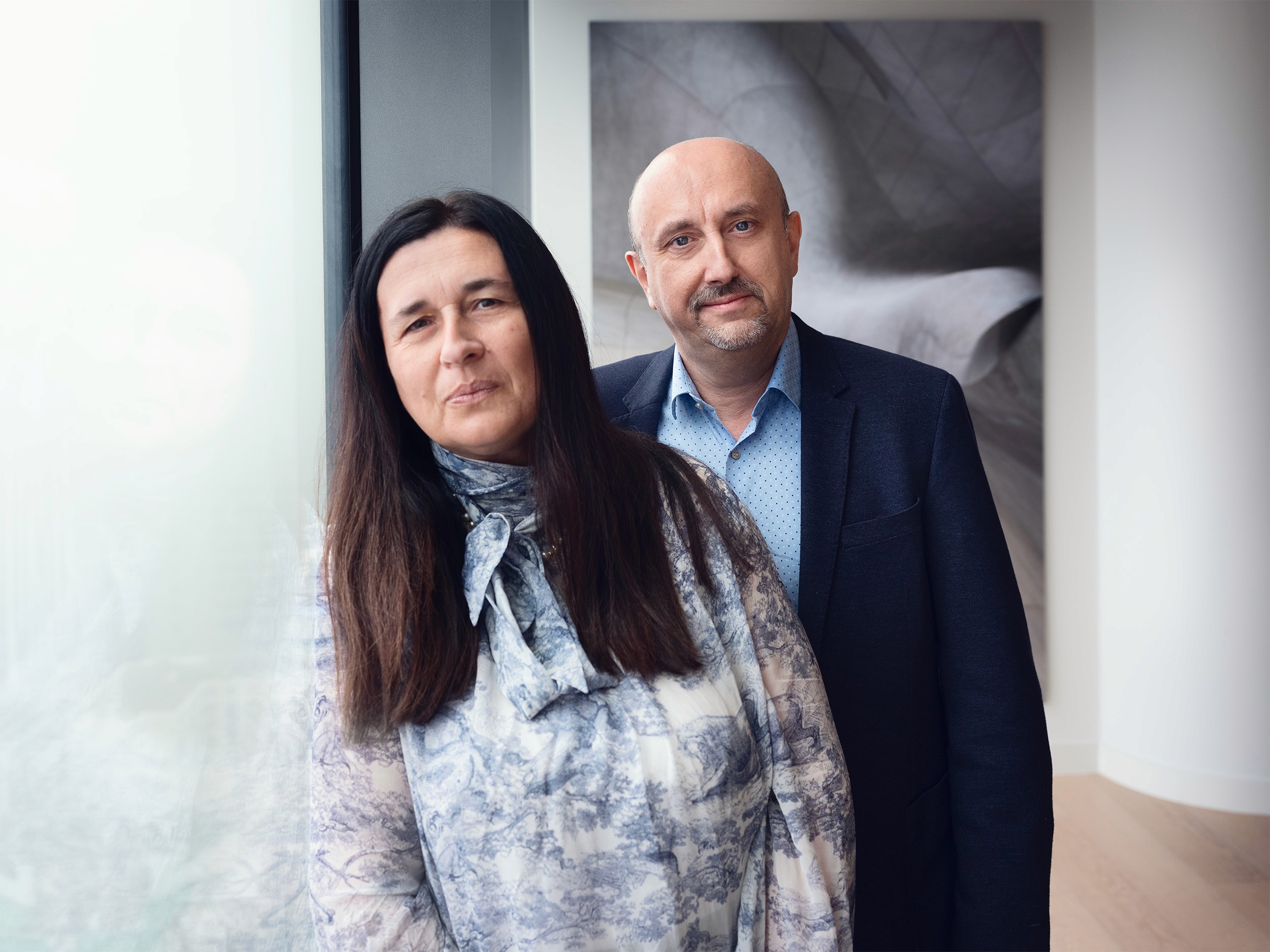
Sitting alongside Marek in driving that change is Aleksandra Auleytner, Partner and Head of DZP’s IP&TMT practice. Where Marek approaches AI from the perspective of infrastructure, adoption, and organisational design, Aleksandra focuses on what makes legal advice credible, including jurisdictional accuracy, legal reasoning, and professional responsibility. Together, their perspectives reveal how DZP is using AI to go deeper into what legal work really is, rather than drifting away from it.
A tectonic shift in scale, quality, and expectations
Marek describes the impact of AI at DZP in strong terms. “It’s a clear shift in the way we support our work,” he says.
“What has shifted most is what is economically and practically possible. AI has enabled DZP to take on complex, data-intensive matters that would previously have been difficult to resource efficiently,” Marek explains. “Not because we couldn’t do the work before, but because now we can do it more efficiently, more consistently, and with greater focus.”
That change is particularly visible in large-scale due diligence and cross-border transactions. Where document volumes once created friction and delay, AI now allows teams to move faster while maintaining consistency. But Marek is clear that speed is not the headline metric. “It’s about how we sustain quality as demands increase,“ he says.
The deeper change is how DZP positions itself with clients. “Our clients are not looking for typical legal services like proofreading documents,” Marek says. “They are looking for strategic advisors.” AI, in his view, allows lawyers to spend less time on routine review and more time on judgement, strategy, and interpretation. “We are continuing to act as trusted legal advisers with an even stronger strategic perspective,” he adds. “This is a very interesting change.”

Where impact appeared first
The first tangible gains for DZP have emerged in areas where volume and complexity collide. Corporate and M&A due diligence was an obvious starting point, as AI helped teams identify risks and inconsistencies across vast document sets. Regulatory and contract review followed closely behind, especially for clients in heavily regulated sectors such as banking, insurance, and real estate, where large contract portfolios demand timeliness and consistency, alongside rigorous legal standards.
Litigation and disputes, however, became one of the most important internal proof points. “Litigation and dispute resolution were the most enthusiastic adopters,” Marek recalls. “They immediately saw the value in discovery, legal research, case preparation, and document-intensive matters.”
As those teams embedded Legora into their standard workflows, others began to follow. “M&A teams were initially more cautious,” he says, “but once they saw concrete examples of success, adoption accelerated significantly.” For DZP, this internal momentum mattered as much as any feature set. “Real change comes from lawyers seeing value in their own work, not from top-down mandates.”
Not an IT rollout
Marek is open about the fact that adoption was not uniform. “That was a valuable lesson about change management,” he says. “This technology is still new.”
Rather than treating that as a problem, DZP treated it as a signal. Training became continuous rather than one-off. Workshops focused on hands-on use rather than demonstrations. Early adopters were encouraged to act as internal champions. “We focused on quick wins,” Marek explains, “use cases with immediate visible impact to build confidence.”
Just as importantly, feedback became systematic. He says, “Every couple of weeks we speak about what works, what doesn’t, and what to improve.”
One outcome of this approach has been a noticeable improvement in collaboration across the firm. Knowledge that once stayed siloed is increasingly shared. “Sometimes it’s a problem with sharing knowledge internally,” Marek says. “Thanks to Legora, we have a DZP library. When everything is shareable, from prompts and approaches, to workflows. You don’t have to start from zero every time.”

Why local legal precision becomes a premium
For Aleksandra, the most important question is not whether AI can produce an answer, but whether it can support the kind of reasoning clients expect. “Clients increasingly ask why something works in Poland, not just whether it works,” she says.
That distinction is crucial in cross-border matters, where legal advice is compared across jurisdictions. Aleksandra is explicit about the starting point: “AI does not understand Polish law by default. You have to train the system to understand Polish law.”
For DZP, that means grounding AI-supported work in Polish-language sources, domestic doctrine, jurisprudence, regulatory guidance, and the reasoning patterns Polish lawyers actually use. It also means recognising limits. Aleksandra describes this as “jurisdictional humility.”
“AI systems are useful not when they generalise, but when they become jurisdictionally humble,” she explains. “The boundaries of the analysis are set by lawyers who understand the legal culture.”
In her view, AI can support reasoning, surface inconsistencies, and challenge assumptions, but ownership of judgement always sits with the lawyer. “It’s not just black-letter law,” she says. “It’s understanding the legal culture and being the owner of the reasoning and the outcome.”
Training lawyers faster for real lawyering
Both Marek and Aleksandra are clear that AI does not remove the need for junior lawyers. Instead, it changes what junior lawyers learn first.
“A trainee who mainly focuses on summarising documents or drafting first-level memorandums will probably become professionally obsolete,” Aleksandra says frankly. But she immediately reframes that as an opportunity. “That doesn’t mean fewer opportunities. It means earlier exposure to more mature lawyering.”
For her, that maturity includes learning how to evaluate AI output, identify hidden assumptions, test legal reasoning, and decide why one argument serves a client better than another. “You have to know how to critically work with legal text created with the help of AI,” she says. “And you have to understand the client’s business, not just the wording of provisions.”
Marek approaches the same shift from a structural perspective. “Traditionally, junior lawyers spend two or three years on routine work,” he says. “With Legora handling documents and base-level research, they can transition to client-facing strategic work much earlier, with supervision, of course.”
But that acceleration doesn’t remove the need for legal foundations. “If you want to use Legora effectively, you have to build your legal background first,” he adds. “You have to understand what you’re doing, what a playbook is, what a workflow means, otherwise the technology doesn’t help you. It only amplifies what you already know.”
Technology, he argues, compresses the learning curve while improving client value. It also affects recruitment. “Young candidates ask us directly if we are using AI” Marek notes. “They want to work in organisations where technology is an enabler, not something resisted.”
Protecting firm intelligence in the age of AI
AI also raises existential questions about ownership of knowledge. Marek does not shy away from the risk. “Using AI is risky if you don’t think about governance from the start,” he says.
From DZP’s perspective, security and data protection are non-negotiable. “One of the first questions we had was about protecting our clients’ data,” he recalls. “Where the data is stored, how it’s encrypted, how access is controlled.”
Yet he also sees AI as a way to strengthen, not dilute, intellectual capital. “AI doesn’t commoditise legal knowledge,” he argues. “It makes proprietary knowledge more viable. Used properly, it can turn expertise from something that disappears after a matter closes into a structured, reusable competitive advantage, without compromising confidentiality.”
Why DZP chose Legora
When Marek explains why DZP chose Legora, he consistently returns to one word: partnership. “This wasn't typical software where a tech company hands you a platform and wishes you good luck,” he says.
“What stands out is working with people who understand how law firms actually operate. They speak our language, literally legal language,” Marek says. “When our lawyers have questions about due diligence or compliance workflows, we speak to people who have done the work themselves.”
Jurisdictional relevance is equally critical. “Many legal AI platforms are built primarily for Anglo-American legal systems,” he says. “For us, the ability to work credibly with Polish law is not negotiable.”
Looking back, Marek admits he initially tried to evaluate AI like any other software purchase, with a traditional ROI spreadsheet. “That was completely the wrong way,” he says. “The value is not just mathematics. It’s cultural. It’s strategic. It’s human.”
More automation, more human law
In the end, both Marek and Aleksandra return to the same conclusion: AI is not making legal work less human. It has made it more so.
“Much of what we traditionally called legal work was actually dehumanising,” Marek says. “Endless document review, repetitive tasks, and long hours spent away from clients were not what lawyers trained for. Clients don’t need their lawyers to read documents. They need us to interpret, navigate uncertainty, and apply wisdom.”
Aleksandra reframes it more gently. “I wouldn’t say AI restores humanism,” she says. “I would say it rebalances legal work. Judgement, responsibility, ethics, and relationships were always at the core of the profession. AI simply helps shift time and attention back to where lawyers are irreplaceable.”
She measures success in human terms. “If you still have the same clients after ten or twenty years, that says everything,” she reflects. “If AI gives us more time for those relationships, that alone would be enough.”