
Across Central and Eastern Europe, the scale of legal work is changing fast. Investment is accelerating, complexity is rising, and the expectations placed on law firms are shifting with it. At Kochański & Partners (K&P), the response has been structural.
The firm positions itself as a gateway to CEE for global capital, while operating as a corporate-managed, technology-driven legal enterprise built for large-scale, high-stakes work. Its focus spans some of the most capital-intensive and complex sectors in the region, from banking to energy and defence, to digital transformation, AI, and cybersecurity, where legal advice is inseparable from business outcomes.
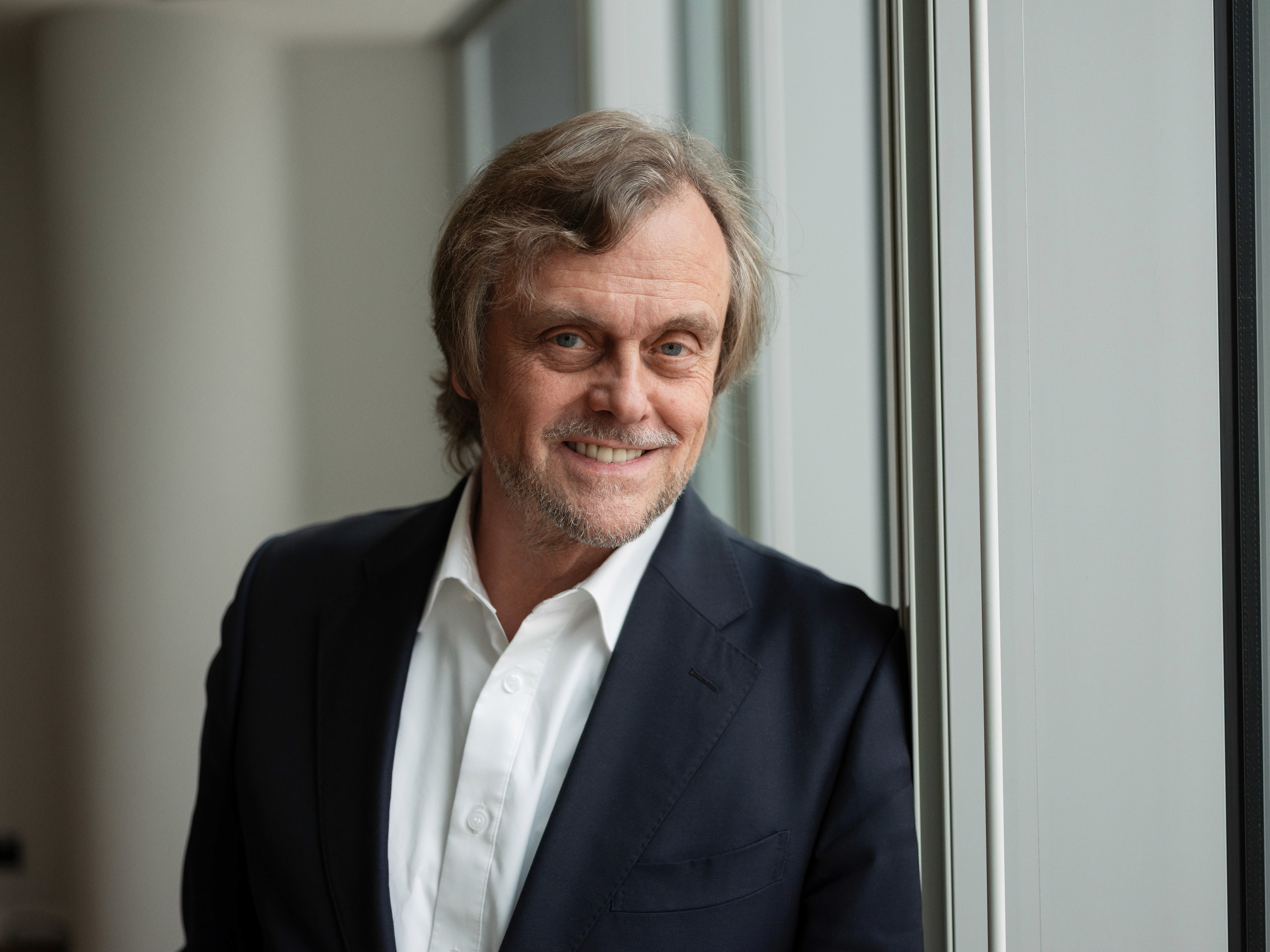
“We combine ambition, talent, and technology to achieve our strategic goals,” says Piotr Kochański, Senior Managing Partner.
With nearly three decades in the market, K&P has moved beyond the traditional partnership model. It’s a firm engineered to handle high-stakes, multi-threaded work across borders, while maintaining consistency in how that work is delivered.
That combination of deep sector involvement, institutional structure, and embedded technology is what sets K&P apart, and what underpins its partnership with Legora.
From individual excellence to system performance
Piotr describes his role as moving between three interconnected worlds. There is the world of individual matters, where he steps into complex, high-risk situations that require senior oversight. There is the world of people, where decisions are made about how teams develop, how lawyers are trained, and how accountability is embedded into culture. And then there is the world of the firm as an organisation.
“It’s the least visible, but it makes the biggest difference,” he says. “How do we build a system that delivers our quality consistently?”
That question has become more pressing as legal work has evolved.“Today, it’s not enough to be substantively strong,” Piotr explains. “You also need to deliver in a way that is secure, traceable, and consistent across the firm.”
For K&P, that has meant shifting focus from individual performance to system design, building standards, processes, and infrastructure that ensure quality does not depend on who happens to be involved in a matter.
Treating AI as part of the operating model
Within that system, AI has a clear role, but only when implemented with discipline.
“We treat AI as an ecosystem: people, processes, tools, and accountability,” Piotr says. “It works when it’s embedded into how the firm operates day to day.”
This perspective reflects a broader reality in legal work. The pressure points are no longer limited to legal analysis itself. They extend to how information is managed, how confidentiality is preserved, how decisions are documented, and how responsibility is assigned.
“Lawyers today are not just interpreting the law,” he adds. “They are managing risk, information, and client relationships in a much more complex environment.”
Against that backdrop, K&P approached AI with a clear set of expectations. It had to operate safely and confidentially, integrate into workflows where lawyers are managing multiple high-priority tasks at once, and scale across the organisation without creating fragmentation.
“We weren’t evaluating whether AI works in theory,” Piotr says. “We were evaluating whether it works in the reality of our law firm.”
Why Legora
That evaluation led to Legora, as a partner in building something more durable.
“What mattered most was the sense that this wasn’t simply selling a product,” Piotr says. “It was a willingness to work together, testing on real materials, iterating, and building standards that we can rely on.”
In a profession where accountability cannot be delegated, that clarity is essential.
“In a law firm, there is no room for ‘we’ll see what happens,’” he adds. “You need to define what is allowed, what is not allowed, who is responsible, and how the work is verified.”
Equally important was flexibility. K&P operates across a wide range of complex practice areas, and its approach depends on tailoring workflows to specific use cases rather than applying a one-size-fits-all model.
“We are not buying a ready-made world,” Piotr says. “We are building solutions that fit our practices.”

Reallocating time to higher-value work
Since implementing Legora, the most visible change has been a shift in how work is structured and where time is spent.
“The biggest change is that we stopped treating our work as something that has to take an absurd amount of time,” Piotr says.
Tasks that once required hours of manual effort are now completed significantly faster. The effect is a redistribution of effort toward higher-value activities.
“AI takes away the mechanical part of the work. That allows our lawyers, especially senior ones, to focus on thinking, strategy, and responsibility.”
This has a direct impact on how the firm develops its people. Junior lawyers gain exposure to more substantive work earlier, while senior lawyers are able to invest more time in guiding decisions, shaping strategy, and mentoring teams.
It also supports a broader shift in how the firm thinks about value.
“There is still a belief in parts of the market that value is measured by hours spent or pages produced,” Piotr says. “But that doesn’t always reflect quality. What matters is solving the problem in a way that is effective, responsible, and usable for the client.”
What clients experience
For clients, these changes translate into a different experience of legal service.
The first is speed. Clients receive meaningful initial outputs, risk assessments, action plans, early conclusions, much sooner in the process. The second is consistency, with less variation depending on which team or individual is involved. The third is a shift in focus, with more time spent discussing strategy and outcomes rather than the mechanics of producing documents.
“This helps clients see earlier where the uncertainties are,” Piotr explains. “What drives the cost, what drives the risk, and how we should approach it.”
In a market where expectations continue to rise, this combination of speed, clarity, and predictability is becoming a defining factor.
Making adoption real
Turning that potential into reality has required a solid approach to adoption.
“Adoption doesn’t happen automatically,” Piotr says. “It’s not enough to tell people to use a tool.”
At K&P, adoption is driven by making the benefits visible in everyday work, providing hands-on support through experienced users, and setting clear standards for how AI should be used. These standards cover everything from confidentiality and acceptable use to quality control and verification.
The firm has reinforced this through a broader strategic programme focused on three pillars: raising the competence level of the team, embedding AI into substantive legal work, and maintaining transparency with clients and partners about how these changes are implemented.
A dedicated group of experienced lawyers leads the implementation effort, ensuring that solutions are grounded in real practice needs and that feedback loops are short and effective.
This structured approach allows K&P to move beyond isolated use cases and build firm-wide consistency.
Maintaining judgment and accountability
Despite the growing role of AI, Piotr is clear about where the defining elements of legal work remain unchanged.
The most critical decisions still depend on understanding what is truly at stake, weighing risks in context, and determining how to act in situations where there is no single obvious answer.
“AI can support analysis, but it won’t replace judgment,” he says.
Maintaining that balance requires careful process design. Speed is valuable, but only when it is controlled. Verification, second reviews in high-risk matters, and clear accountability remain central to how work is delivered.
“It’s not a question of speed versus quality,” Piotr explains. “It’s about designing processes where speed supports quality, rather than undermining it.”
Looking ahead
In the future, Piotr expects many of the changes currently underway to become standard practice. Lawyers will increasingly begin their work from structured foundations, summaries, risk maps, and draft outputs, before applying their expertise to refine and act on them.
At the same time, firms will need to develop greater operational maturity, particularly in how they measure quality, time, and risk, and how they scale internal knowledge in a secure and controlled way.
There are also risks to navigate. Outputs that appear convincing but are incorrect, the potential for unintended disclosure of sensitive information, and the need to maintain clear accountability all require ongoing attention.
A different way of delivering legal work
At its core, the transformation at Kochański & Partners is about building a firm that can operate at the level modern clients require. That means combining deep expertise with structured processes, supported by technology, and reinforced by a culture of accountability.
“A high-performing legal team combines competence, accountability, process, collaboration, and technology,” Piotr says. “And it can act quickly without losing quality, because it has standards.”
That is the direction the firm is pursuing, one where legal work is no longer defined by time spent, but by the clarity, consistency, and impact of the outcomes delivered.