Forvis Mazars in Germany has partnered with Legora to accelerate a clear ambition: to embed AI into the daily rhythm of legal work, and keep it there. The early results are already visible. Across the firm’s legal teams, daily usage of Legora is already 80%+ among licensed lawyers, with a clear target to exceed 90% by December 2026.
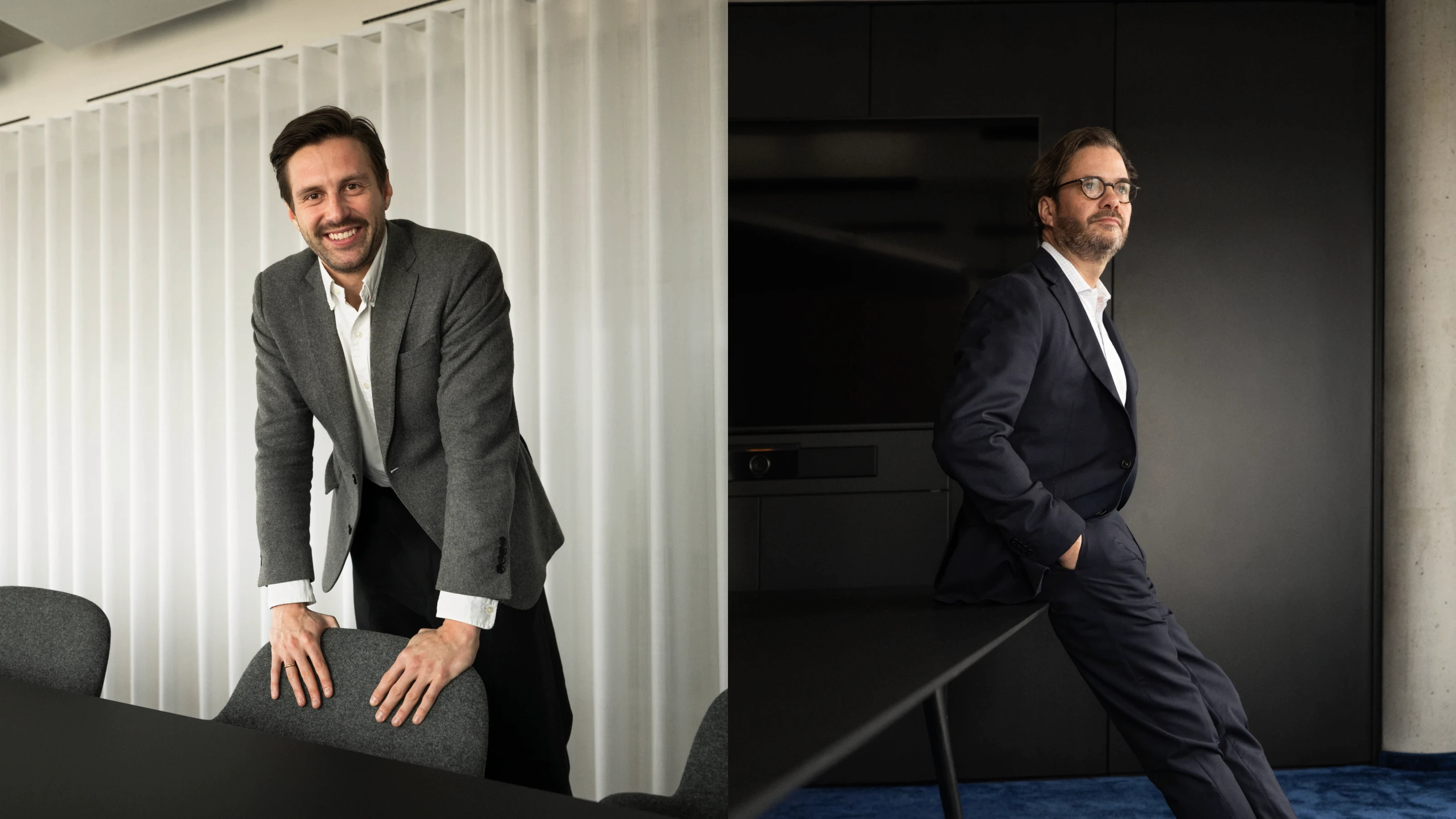
Benedikt Raquet, Head of Legal Tech at Forvis Mazars in Germany, is responsible for turning AI into something lawyers actually use in their day-to-day work. Alongside him, Ferdinand von Wrede, M&A Partner leads the initiative at partner level, bringing a perspective shaped by disruption beyond the legal industry.
“I’ve seen this before,” Ferdinand says. “In the media industry, we saw the internet coming, but not everyone fully acted on it. By the time pure online competitors emerged, it was too late for some. I said to myself: this should never happen again.” Now, he sees legal at a similar inflection point.
“I strongly believe this is a real disruption. The legal industry will change, just like others did. Some will adapt, others won’t.”
Together, that combination, operational execution and partner-level urgency, is shaping a different approach to adoption. Forvis Mazars is focusing on change management, lawyer-led implementation, and a single platform strategy built for the long haul.
A lawyer-led transformation
Benedikt’s role exists to bridge the gap between “AI is interesting” and “AI is how we actually work.” That starts with a simple principle: legal AI shouldn’t only be an IT initiative. It needs to be embedded in legal workflows and owned by lawyers themselves. Adoption happens when the technology shows up directly inside the work.
So before choosing a platform, Benedikt spoke to 18 different legal teams and asked each of them to identify their most valuable use cases. Those were consolidated into a structured list and mapped against the major platforms on the market. The firm then tested the strongest candidates directly against those use cases.
Following a structured evaluation process, Forvis Mazars selected Legora as one of the platforms supporting its legal AI strategy. From a partner perspective, the decision also came down to cohesion.
“We didn’t want isolated tools or small islands,” Ferdinand explains. “We wanted one solution that integrates with how we already work, with Microsoft Office, with iManage, with our existing systems.”

Buying the tool is only 10% of the work
One of Benedikt’s most consistent observations is that firms often misunderstand where the real work of AI adoption lies.
“Choosing the tool is maybe 10% of the project,” he explains. “90% is everything that comes afterwards.”
That “everything” includes change management, training, cultural buy-in, and helping lawyers see how AI fits into the work they already do.
Ferdinand sees exactly the same dynamic from a leadership perspective.
“The biggest obstacle is not the tool,” he says. “It’s the change in mindset. People are used to working in a certain way. Changing that takes time.”
It also means moving away from the idea that AI is some kind of shortcut. Some lawyers initially worry that using AI feels like cheating. Benedikt’s response is simple: try it.
“Particularly in the non-billable parts of work, drafting internal emails, summarising documents, polishing language, it can feel almost unfairly efficient. Writing an email in English to twenty recipients, can now take seconds instead of minutes.”
But in billable legal work, he sees it differently.
“AI doesn’t replace legal judgement; it raises the baseline quality of the work lawyers produce.”
Ferdinand reinforces that boundary.
“Legora gives you a very strong starting point,” he says. “But it doesn’t take responsibility away from you. You are still the lawyer.”
Using AI today is no more “cheating” than writing a document in Word instead of on a typewriter. It’s simply a better tool for the job. And increasingly, it’s not optional.
“As a law firm, the question isn’t whether we adopt AI,” Benedikt says. “Everyone else will have it. The real question is how we adopt it.”

Turning adoption into a measurable outcome
The firm’s adoption strategy is supported by a structured change management programme developed internally. The training model is practical. Instead of generic demonstrations, sessions are built around the actual work lawyers do. Before meeting a team, Benedikt asks them to describe what a “typical Tuesday morning” looks like in their practice. He then prepares examples that replicate those tasks using Legora. When lawyers see their own workflows reflected back to them, the relevance becomes obvious.
The approach also recognises that adoption looks different across seniority levels.
“In due diligence, it’s a game changer,” Ferdinand says. “Working with large volumes of data, that’s where you immediately see the impact.”
But for more senior lawyers, the gains are often more incremental.
“If I need to draft or adapt a clause, something that might have taken ten or fifteen minutes before now takes three,” he explains. “It’s not dramatic in isolation, but across a day, it adds up.”

Unlocking knowledge across teams and borders
One of the most powerful outcomes so far has been the ability to build a shared knowledge environment across the legal department. Knowledge management has historically been a struggle in law firms. Systems exist, but they require manual upkeep, careful organisation, and constant discipline. Over time, participation tends to fade.
With AI-enabled search and interaction, that barrier changes.
Forvis Mazars frequently handles cross-border matters, and Legora now provides a shared environment where lawyers in different jurisdictions can collaborate on the same projects and access the same knowledge base.
Collaboration with clients
The next step for the firm is extending AI-enabled collaboration beyond internal teams and into client work.
Benedikt is particularly interested in the potential for more collaborative workflows between firms and their clients.In that context, AI becomes a layer that supports closer working relationships. Equally important, Forvis Mazars always applies strict governance standards regarding confidentiality, data protection, and professional responsibility when using AI tools.
Ferdinand sees this evolving further into entirely new types of service.
“We will develop new products,” he says. “If AI reduces time, that doesn’t mean less work. It means different work.”
He points to examples that were previously impractical.
“After a transaction, why not review employment agreements of the acquired company and align them to the client’s standards? That’s something we wouldn’t have done before.”

The real differentiator
Benedikt believes the competitive landscape will shift quickly.
“Right now, adopting AI still signals innovation. But soon, it will become the baseline. At that point, the differentiator won’t be having AI. It will be how the firm shapes it.”
Ferdinand puts it more directly.
“It’s like the internet,” he says. “It will not go away. And it will develop faster than we expect. The sooner you adapt, the better your chances to be among the winners.”
“Generic AI will not differentiate anyone,” Benedikt adds. “What will matter is enhancing it with your own knowledge and experience.”
That’s the direction Forvis Mazars is moving in now, and the reason Legora has become a central part of that journey.