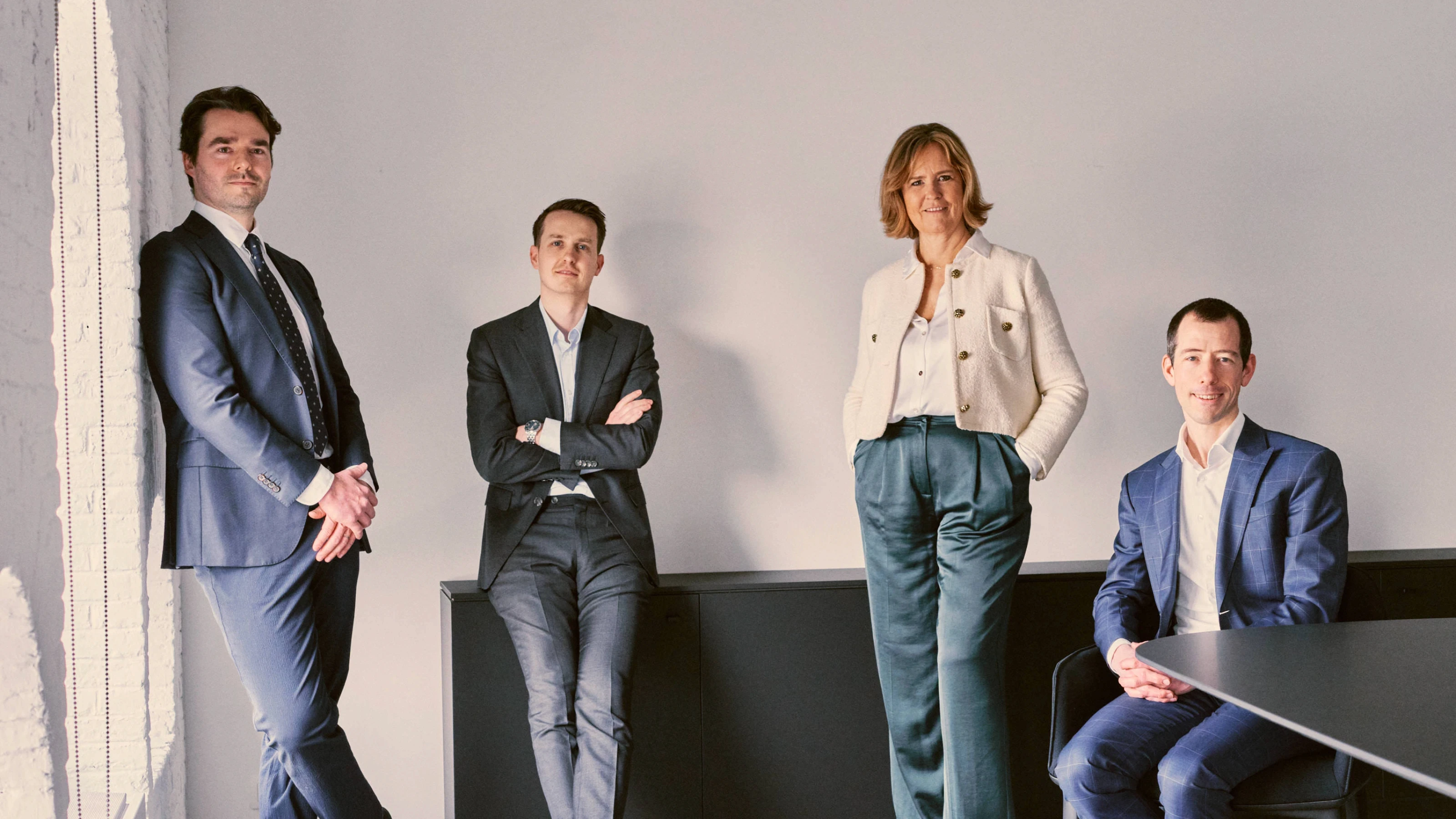
As ALTIUS moves from pilot to firm-wide rollout of legal AI, for both its lawyers and non-lawyers, the firm is approaching adoption deliberately. The goal is to stay sharp, continue delivering high-quality work for clients, and equip its people for what legal practice is becoming.
That meant moving early, but not blindly. It meant testing widely, involving lawyers closely, and ultimately choosing a platform built for the way lawyers actually think and work.
For Valerie Struye, General Manager at ALTIUS, the timing was crucial. “You can wait forever for everything to be perfect,” she says. “But we had confidence in the quality of today’s tools – and enough trust in the partner behind them to start learning now.” That is what led ALTIUS, one of Belgium’s leading independent law firms, to Legora.
Starting before everything is settled
For ALTIUS, the case for AI was shaped by several forces at once. The first was the pace of improvement in large language models. The second was the reality of operating as an independent firm in a competitive market, where staying at the forefront of innovation is not optional. The third was client expectation. And the fourth was already visible inside the firm: some lawyers were using AI anyway.
Rather than leaving experimentation to happen informally, ALTIUS wanted to equip the firm properly, give people a secure and shared environment, and create the conditions for collaboration rather than fragmentation. There was also a belief that adopting early brings a different kind of advantage. You do not just consume the product as it exists. You help shape what it becomes.
Bregt Raus, Managing Associate in IP and EU Regulatory Law and a member of the firm’s legal tech team, had been an early and enthusiastic AI user. For him, the significance was obvious from the start. “Lawyering is a language game, and large language models are a language tool,” he says. As the technology matured, that intuition only strengthened.
ALTIUS tested extensively, reviewing more than 15 tools. What stood out about Legora was that it felt mature, but also that it felt responsive. Bregt describes a partnership where feedback turned quickly into product improvement, including practical work to make Belgian legal sources more accessible inside the platform. It gave the team confidence that this was not a static tool, but one they could build with.

Curiosity first, then commitment
ALTIUS’ motto, “open minds, bold ideas,” became more than a line in this process. It described how the firm approached the decision itself.
The open-minded part showed up in the way the team explored the market. They stayed curious, tested broadly, and let their understanding evolve alongside the tools. What they wanted from AI changed as the technology changed. The boldness was in deciding not to take the smallest possible step.
As Valerie puts it, the firm could have chosen a more cautious route. Instead, it made a bigger commitment to a platform purpose-built for legal work, one it believed could take the firm further.
That decision was not made top-down. ALTIUS had already built an internal legal tech team years earlier, made up not by hierarchy, but by interest. Lawyers from across the firm who were curious about legal tech kept the work moving, with regular meetings, demos, testing, and internal discussion. That team became the engine behind the evaluation process.
When Legora emerged as a serious contender, ALTIUS ran a pilot with around 20 lawyers. Participation came with a condition: if you joined, you had to give feedback. That made the pilot become part of the firm’s decision-making process.
The moment it clicked
Sometimes adoption is visible in the data. Sometimes it shows up in the hallway. For Bregt, one moment during the pilot made the difference clear. Sharing an office with a younger lawyer, he mentioned that the legal tech team was meeting to discuss the pilots. Her response was immediate: “Wait, you’re not going to take Legora away from me, right?”
Unlike other tools the firm had tested, Legora was already becoming part of the work. Lawyers were using it in live matters, talking about it with colleagues, and quickly recognising its value.
That response reflected something ALTIUS saw consistently during testing: lawyers did not just find the platform useful. They were actually using it.
Ease of use had been one of the firm’s non-negotiables, alongside confidentiality, data handling, and legal-grade output. ALTIUS wanted a platform that lawyers could enter without friction, and one whose outputs they could interrogate rather than simply accept. That last point proved especially important.

Built for legal scepticism
Lawyers are trained not to stop at the answer. They want the source, the reasoning, and the route from one to the other.
That is why one of the features that resonated most with the ALTIUS team was Legora’s citation and source-grounding system. Bregt describes it as something much more than a footnote. It allows lawyers to move directly from an answer to the relevant part of the underlying material, then inspect how the platform reached its conclusion.
“We’re sceptical by nature,” he says. “When someone says it’s X, lawyers are like, wait, why is it X?”
That ability to verify and challenge the output helped make AI feel usable in a legal context, because it respected doubt.
The team also found value in more concrete workflows. Thijs Herremans, Counsel in Corporate M&A, points to clause review as an early standout use case. “In transactional work” he notes, “much of the time pressure falls on reviewing and responding to dense contractual language under tight deadlines. Legora can quickly surface a first-pass analysis of complex provisions, identify negotiation positions, and suggest ways to revise clauses in the client’s interest.”
For Jan Clinck, Counsel in ICT and Data Protection, the value showed up in research. In his area, relevant authority decisions are public, but voluminous. Instead of manually working through hundreds of decisions, he could use Legora to surface the most relevant ones for a particular issue, dramatically narrowing the field while keeping the reasoning anchored to source material.
Across these use cases, the pattern was the same: not blind automation, but faster orientation, better starting points, and more room for legal judgment.

Launching for the whole firm, not the few
Since January 1, ALTIUS has moved into a broader rollout, equipping the whole firm with Legora, not just lawyers but non-lawyers too. That choice was deliberate. The goal was to avoid a two-speed firm, where a small group surged ahead while others lagged behind. Instead, ALTIUS wanted one shared environment, one common language, and one platform around which the firm could build capability together.
The rollout is still in what Valerie describes as the launch phase, but the direction is clear. Alongside formal onboarding with Legora, the firm has built internal habits to support adoption. At monthly town halls, people are invited to share one tip or example of something they have done with the platform. Within departments, Legora now features in know-how meetings, where teams exchange prompts, practical lessons, and problems they are solving.
ALTIUS has also paid close attention to the small behavioural details that influence whether a tool becomes part of daily work. Word and Outlook integrations matter because lawyers already live there. Single sign-on matters because friction compounds. Even a desktop app icon matters if it makes the platform feel like part of the normal working environment rather than something separate.
If AI is going to become embedded, it needs to meet lawyers where they are.
From individual use to firm-wide collaboration
Right now, the priority at ALTIUS is to make sure people are comfortable with the tool. The next phase is more collaborative.
That includes sharing prompt strategies, building standardised workflows, and creating common approaches around repeatable legal tasks. Bregt points to the possibility of department-level prompt libraries and standard review workflows that can be reused and improved over time. Jan highlights the growing use of internal databases shared across teams, so lawyers are working from the same base of decisions and materials.
AI as a thinking engine, not an answer engine
One of the clearest themes from the conversation was how ALTIUS talks about AI internally.
The message is not that the tool provides the answer. It is that it helps the lawyer think better, search better, and move faster through the parts of legal work that do not need to consume disproportionate time.
Bregt puts it simply: do not use it as an answer engine, use it as a thinking engine.
That distinction is important because it preserves the role of judgment. The lawyer is still responsible for framing the problem, evaluating the output, testing the reasoning, and deciding what advice should ultimately be given. AI supports that work, but does not replace it.
Thijs describes it as a sparring partner that is always available. In contract work, that means not just speeding up clause edits, but helping think through negotiation strategy, explore positions, and stress-test different approaches before deciding how to proceed.
Valerie’s framing is broader, but equally clear. She sees AI as increasing lawyers’ capabilities, not diminishing their role. “It’s the lawyer’s bionic powers,” she says.
That additional capability makes a difference for client service. If less time is spent on manual research or repetitive first-pass tasks, more time can go into understanding the client, shaping strategy, and delivering more thoughtful advice.

More value, not less
Like every law firm engaging seriously with AI, ALTIUS is also thinking about what this means for pricing, outputs, and the business model beneath legal work.
Valerie is realistic about the scale of that question. AI is a disruptor not only of tasks, but of assumptions. Yet the firm’s view is clear: AI should not become a destroyer of value. It should become a source of increased value for clients.
That may mean better work in the same amount of time. It may mean new, productised outputs that were previously too time-consuming to offer. It may eventually mean more tiered services, where clients choose between different levels of review and involvement depending on their budget and needs.
Bregt compares that future to the evolution of legal translation, where machine translation did not eliminate expertise but created different service levels around it. In the same way, legal AI may open up new ways of packaging knowledge and review.
For now, though, the immediate effect is simpler. AI does not mean that a five-hour memo shall become a one-hour memo, but rather it becomes a better memo.
What junior lawyers will need next
The biggest long-term question may not be what AI changes for today’s senior lawyers, but how it changes the path for the next generation.
At ALTIUS, there is no illusion that junior training can remain exactly as it was. If AI compresses or removes some of the labour-intensive tasks that traditionally formed the early years of legal work, firms will need to think more deliberately about how judgment, drafting discipline, and critical thinking get developed. That does not mean junior lawyers become less important. Quite the opposite. It means the bar changes.
Jan notes that the ability to work effectively with AI tools will quickly become a core asset. Valerie goes further, arguing that firms may increasingly need to recruit for qualities like curiosity and critical thinking, not just academic excellence. The risk is not that young lawyers use AI. The risk is that they defer to it too easily.
Bregt captures the balance neatly: firms will need young lawyers who are open enough to use AI, but bold enough to challenge it.
That mindset is especially important in writing. Drafting, he argues, is still something lawyers must learn through feedback, revision, and judgment. AI can help, but only if lawyers remain alert to its weaknesses, including verbosity, overconfidence, and generic phrasing. The goal is not to outsource thought. It is to sharpen it.

What a strong partnership looks like
For ALTIUS, a strong relationship with a legal tech provider starts with product fit, but it does not end there.
It requires trust on the fundamentals, especially confidentiality and data handling. It requires responsiveness, practical support, and people who understand legal work well enough to help solve real problems. And it requires a sense that both sides are invested in each other’s progress.
That mutuality came through clearly in the interview. ALTIUS did not choose Legora solely because of what the product could already do. It chose Legora because of how the team engaged during the pilot, how feedback was handled, and how naturally the working relationship formed.
For Valerie, the sense that the teams understood each other, communicated well, and could build together was a big part of the decision.
Five years from now
Ask the ALTIUS team what legal work will look like in five years, and the answer is quite grounded.
AI will be more embedded. Lawyers will be operating at a better cruising speed with it. Some services will be productised differently. Baseline quality across legal work will likely rise. The structure of training, pricing, and workflow may shift. But the deeper change is cultural.
The firms that benefit most will not be the ones that waited for certainty. They will be the ones that built confidence early, created shared habits, and learned how to turn AI into something practical, critical, and human-led.
That is what ALTIUS is doing now. And like any serious transformation, it starts with the right mindset.