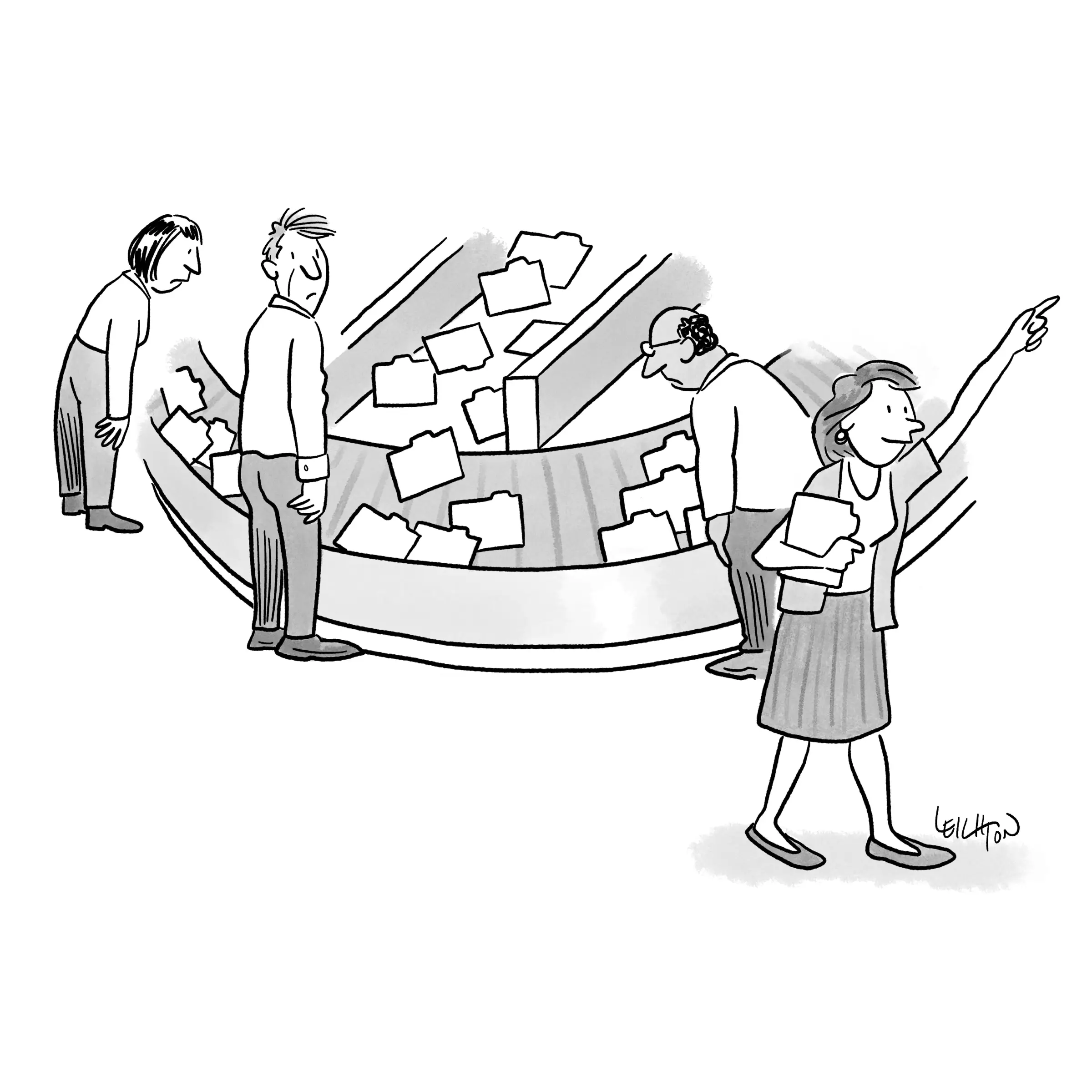
Van Doorne has long positioned itself as a deliberately relational firm. When one client came to them after receiving 150 warranty and indemnity claims within six months, Van Doorne worked alongside the client to analyse the entire intake and assessment process.
Instead of focusing on a case-by-case legal defence, Van Doorne helped map how claims entered the organisation, where information stalled, which steps were structurally identical, and where judgement truly mattered. AI was at the center of that redesign.
The result was not only faster drafting, but earlier involvement, deeper operational visibility, and a more strategic partnership with the client.
That shift captures something larger happening inside the Amsterdam firm.
Human-centred meets AI
When AI first entered the conversation, there were doubts about fit. “At first, our culture seemed at odds with AI,” says Managing Partner Sjoerd Kamerbeek. “But what we now see, two years into our journey, is that relationships, internally and externally, have become stronger because of it.”
In certain claims processes, first drafts generated through structured AI workflows now reach 85–90% completeness before human review. Juniors refine. Partners finalise. Human administration on specific stages has reduced by 40–50%.
But the more important shift is qualitative. Lawyers are spending less time assembling information and more time on where the client receives true value - stress-testing arguments, interrogating assumptions, and advising clients on strategic direction.
“The lawyer of the future is there to say left or right on critical items,” Kamerbeek says. “There’s much less digging themselves. But the work doesn’t disappear. It moves upward, hours are put to more strategic use, and the client receives greater value.”
Choosing a partner
Like many firms, Van Doorne tested multiple AI tools. Individual teams experimented. Pilots ran in parallel. But experimentation alone could not create momentum.
“We found it difficult to bring it to the next level when there was not an overarching tool,” Kamerbeek says. The firm needed a shared baseline, something broad enough to cover document review, drafting, and research, and strong enough to support firm-wide adoption.
The fundamentals were clear. Confidentiality was non-negotiable. Data had to remain within European jurisdiction. The firm’s underlying knowledge could not be exposed externally.
But beyond the technical criteria, alignment mattered.
Van Doorne wanted a partner willing to invest time on the ground, running sessions, sitting with lawyers, participating in internal discussions, and supporting adoption as a cultural process.
“We found in Legora a partner that ticked all the technology boxes, but one that was also willing to really spend time with us,” Kamerbeek says. “That presence has really helped embed Legora into our culture.”
Lawyers leading lawyers
From the outset, Van Doorne knew that adoption would only truly succeed if it was lawyer-led. Two senior lawyers were allocated significant time to define strategy and drive internal enablement. Not IT. Not consultants. Practising lawyers.
“Lawyers are critical, and sometimes they simply don’t listen,” Kamerbeek says. “But if their fellow lawyers explain it, they do.”
That decision shifted the tone from. Inspiration sessions became showcases. Lawyers demonstrated prompts. Workflows were refined collectively. AI moved from experimental curiosity to something openly used and celebrated.
Another way to help embed adoption is that Partners are expected to use the tools themselves, and non-usage quickly becomes part of leadership conversations.
“You need to stimulate your teams to use it,” Kamerbeek says. “But you also need to use it yourself.”
That expectation changed behaviour quickly. It also sent a signal to junior lawyers that this was part of what being a modern lawyer at Van Doorne meant.
When senior lawyers engage directly, adoption moves from curiosity to capability. Juniors began teaching seniors. Hierarchies softened even further.
“We have juniors explaining to partners how to use the systems,” he says. “It creates interdependency, with Legora unexpectedly becoming a cultural leveller.”
He recalls a long-standing senior partner sitting beside him, learning AI tools together. “That was unthinkable in the past,” he says. “It brings us together because we’re all testing.”

Making complexity repeatable
AI also forced something else: reflection.
“As lawyers, we tend to think that we’re doing very complex work,” Kamerbeek says. “But once you start mapping the underlying workflows, you realise how much of it follows the same structure.”
An M&A deal closes. A warranty claim arises. Information is incomplete. Clarifications are requested. Advice is drafted. Coverage is assessed. It’s high stakes, but structurally repeatable.
By mapping these steps explicitly, “putting your brains on the table,” the firm has been able to automate defined components while elevating judgement-heavy moments.
In disputes, teams stress-test statements live in hearings against multi-year document sets. In M&A-related claims, structured workflows generate grounded first drafts based on previous matters. In due diligence, detailed prompt frameworks interrogate large contract portfolios to extract consistent risk themes.
The impact is efficiency, consistency and the ability to engage earlier and commercially deeper with clients.
From advisor to operational partner
The 150-claim client conversation illustrates the broader shift.
Rather than acting only once a claim escalates, Van Doorne now sits alongside clients to analyse intake, triage, and assessment processes. Where does time get lost? Which steps are identical across matters? What can be structured?
“It breaks through the advisor relationship,” Kamerbeek says. “It becomes more of a partnering relationship.”
In several instances, it has led to expanded mandates and new commercial propositions. Faster turnaround and clearer workflows have strengthened the firm’s position on panels and pitches. In at least one key client relationship, revenues have increased without proportional headcount growth.
Efficiency, in this model, supports value creation, not fee erosion.
Stronger juniors, earlier judgement
Few questions surface more frequently in AI discussions than the future of junior lawyers. Kamerbeek’s answer is characteristically direct.
“If I see what our juniors are able to deliver now, it’s a huge difference compared to when I started,” he says. “That’s to the benefit of our clients.”
He has even suggested increasing junior rates, not reducing junior hiring.
The logic is simple. AI provides structure immediately. Instead of staring at a blank page drafting a first letter from scratch, juniors begin with grounded frameworks built on decades of precedent. That frees cognitive space earlier in their careers for analysis and judgement.
The traditional review ladder remains firmly in place. AI-generated work is reviewed at junior level and escalated to senior oversight. But development accelerates. Earlier responsibility. Earlier judgement calls. Higher-quality output.
“AI gives them a head start,” Kamerbeek says. “But the call still needs to be made by a human.”
More human, not less
Ultimately, the story at Van Doorne is about removing friction, to leave more room for humanity.
“Using Legora gives me the time to call my client,” Kamerbeek says. “Ultimately, clients use us not just because of the expertise, but because of the people.”
“I have more time for strategic conversations, more space for judgement, more collaboration across generations, and more operational partnership with clients.”
Legora, at Van Doorne, has expanded the role of the lawyer. And in doing so, it has strengthened exactly what the firm has always valued most: relationships.