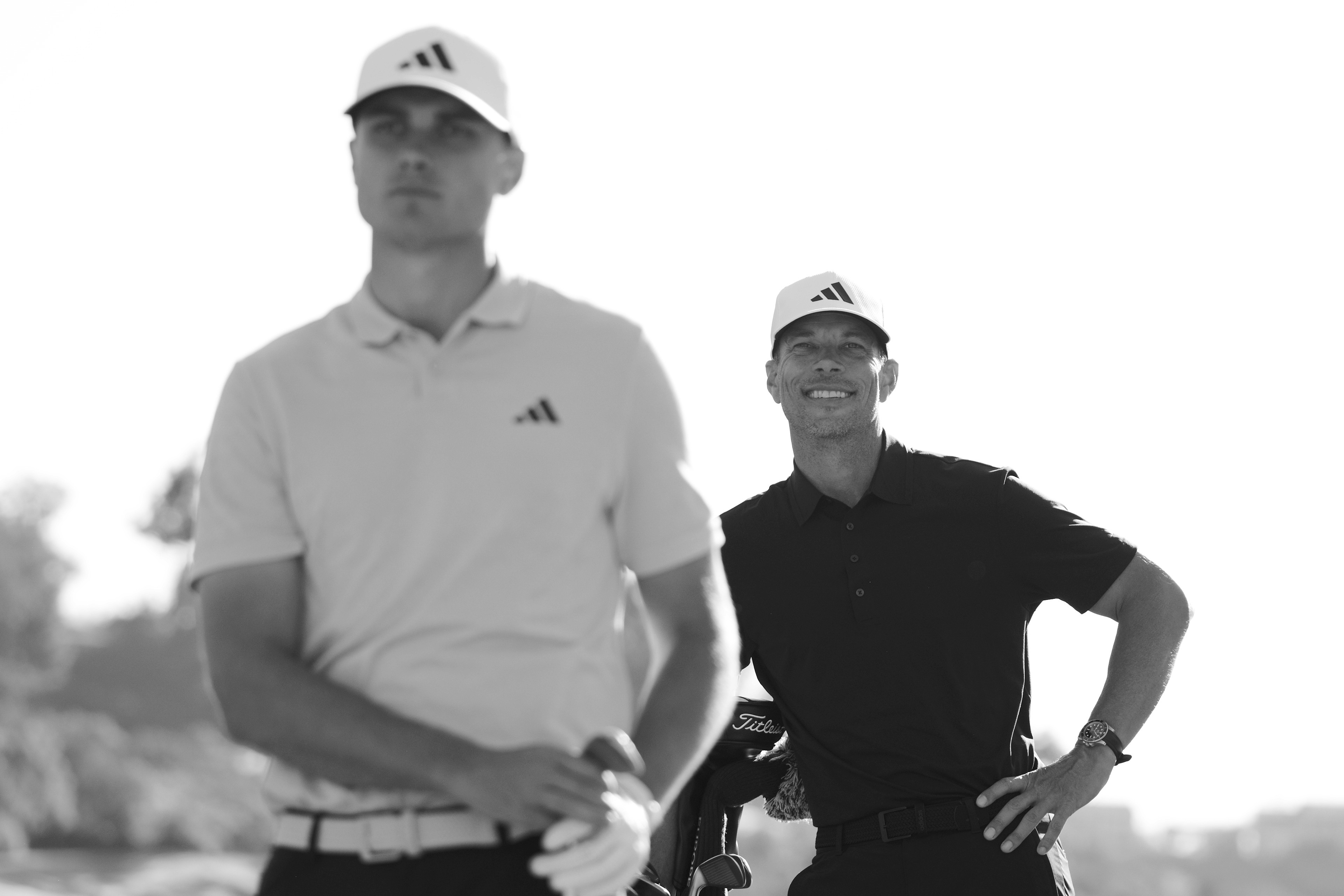
He’s the advisor behind million-dollar decisions who also rakes bunkers for a living. Ludvig Åberg’s caddie, Joe Skovron, is one of golf’s most trusted voices. We sat down with him to talk about preparation, confidence, and helping the best perform under pressure.
At first glance, the caddie can look like the least glamorous figure in golf. He carries the bag, hands over clubs, and steps aside when it’s time to hit the shot. But spend an hour talking to Joe Skovron, and that picture falls apart.
A great caddie is several things at once. Part strategist, part morale-booster, part steady presence. Sometimes they need to simplify, filter out the noise and bring it all back to basics. Other times it falls on them to add nuance and information to a decision. In a sport that presents itself as deeply individual, Skovron’s role is a reminder that even the best in the world perform at their highest level with the right support system around them.
Today, Skovron works with Ludvig Åberg, one of golf’s most exciting young stars. But his road to caddying was anything but scripted.
The playing caddie
“I kind of accidentally got into it,” he says. “Golf was always there. My father was a PGA professional, and my mother ran the local junior golf association. I started competing at nine years old.”
He played college golf, then entered lower-level professional tournaments before the moment came. The moment that so many players eventually face: the realization that hard work and talent, while real, may not be enough.
Instead, another path opened.
On the road playing mini-tour events, Skovron used to room with the now three-time PGA Tour winner Brendan Steele, and would sometimes caddie for him when he himself missed the cut. But he also picked up other fill-in jobs on the LPGA Tour, coaching college golf, and working on a golf clothing brand. At the time, caddying felt far from the start of a full-time profession.
Then Skovron’s long-time friend Rickie Fowler asked him to come and caddie for him at the end of his amateur career. Skovron quit coaching, took the job, and never looked back.
Fowler shortly turned pro and became one of the most popular players on tour, and the old buddies from Southern California made headlines as the new team to watch in golf.
As a rookie caddie, what surprised Skovron most was not the extreme travel schedule or the pressure on the first tee, but the level of detail the best caddies were paying to their craft.
“As a player, so much of my attention went into trying to hit the ball perfectly. As a caddie, I began to understand how much of golf that’s shaped by everything else: lies, grain, wind, rough, turf. I started reading lies more, and thinking about things I tended to miss as a player. I also think it was important to realize these guys don’t hit it perfect every time. There’s a lot more to it than just trying to hit it pure,” he says.
Consultant. Rake operator.
Ask Skovron to describe his job to someone who’s never heard of golf before and he’ll give you a straight answer.
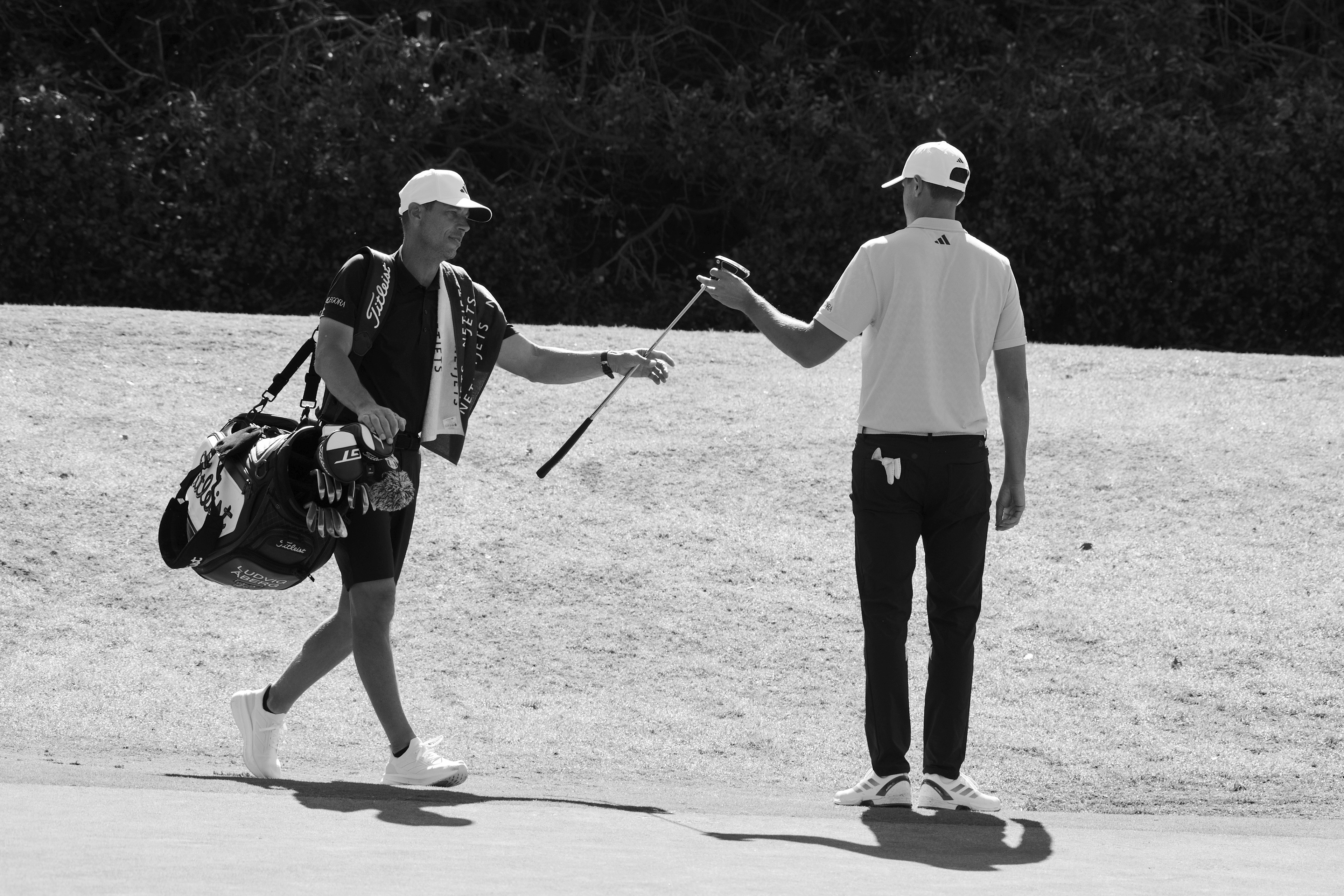
“I carry golf clubs, I rake bunkers, I give yardages, I give wind,” he says.
“And I’m a consultant to the golfer on hitting their shot.”
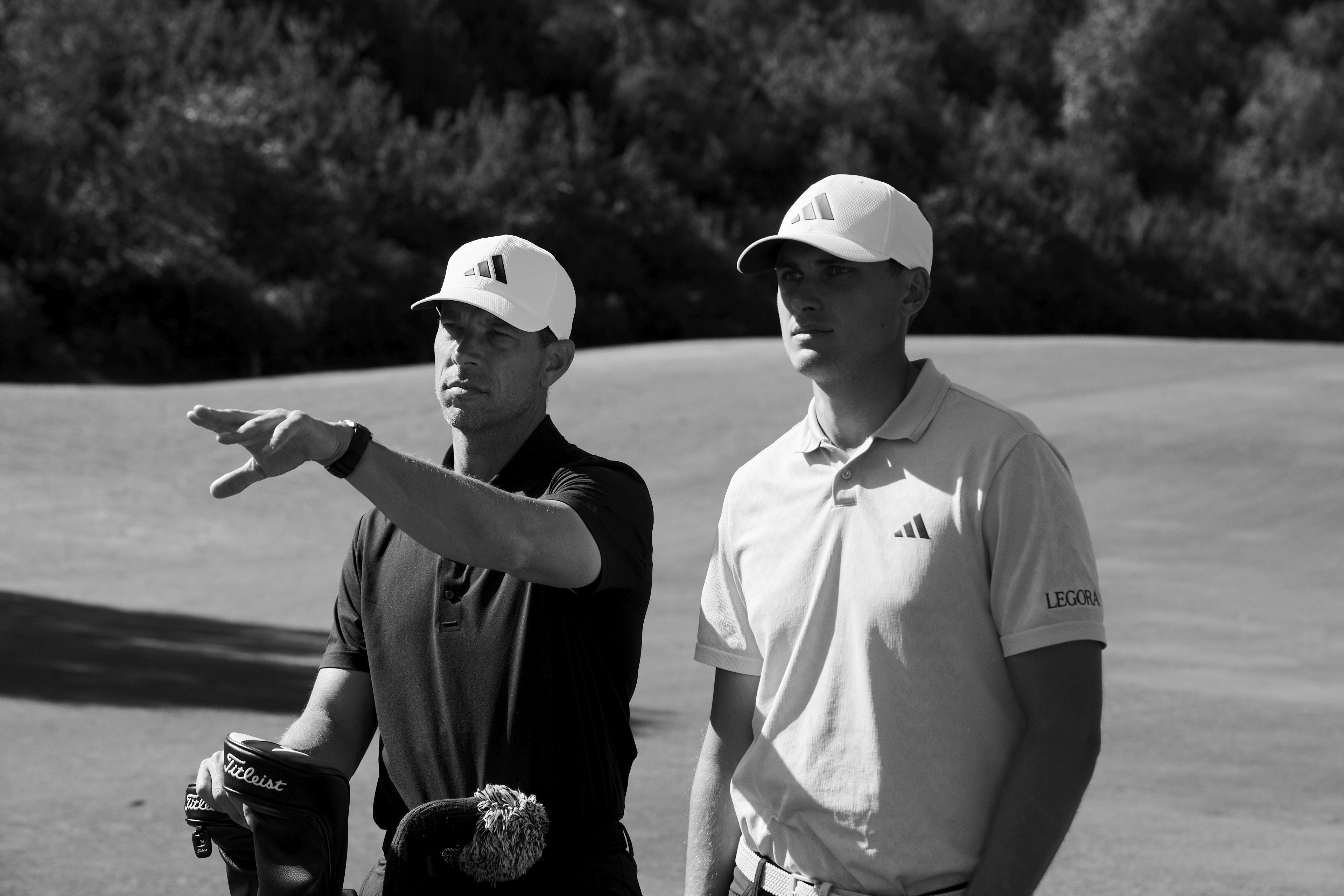
It’s a line that captures the on-course role perfectly. The caddie is not there to replace the player’s judgment. He is there to sharpen it. Not to take the shot, but to help define it.
But that only works if there’s trust. For Skovron, the difference between carrying the bag and becoming someone a player truly relies on starts with preparation.
“If the player knows you’ll show up on time with the correct numbers, wind, angles and course experience, that’s a big burden off their shoulders. They can just commit to the shot and execute.”
So preparation is key, but experience matters too. So does understanding what a player needs from you when the cut is on the line on Friday, or when the trophy is slipping into focus on Sunday afternoon. That is when the role becomes most visible.
When it matters most
“There’s always a lot going on,” Skovron says of those high-pressure moments. “The important thing for me is to get ahead of it. I obviously need to stay present, but I also have to think about the next tee, where a pin might be tomorrow, what kind of miss will leave the right up-and-down, or what decision off the tee that’ll feel most comfortable under pressure.”
That mindset is most visible when things go wrong. During the final round at The Players Championship earlier this year, holding the lead, Åberg found the water on the 11th, one of the most punishing parts of the course.
For Skovron, there was no pause to process it.
“The second I see the ball go in, it’s just: okay, let’s move on,” he says. “Let’s get the drop right, get the number, and go hit a good shot. We can’t be thinking more about that one.”
It’s a small window into the role, but a key one. While the player feels the full weight of the moment, the caddie’s job is to absorb none of it, and instead create clarity for what comes next.
When the stakes rise, so does the importance of the mental side of the job.
“In heightened situations, the psychological aspect is everything,” he says. “Our attitude can drag the player down, or lift them up. The job isn’t just to know what club to hit. It’s to remain calm and focused, so the player feels calm too.
That calm is built long before the moment arrives. Much of the work happens earlier in the week, walking the course, mapping out strategy, preparing for different wind directions and pin positions.
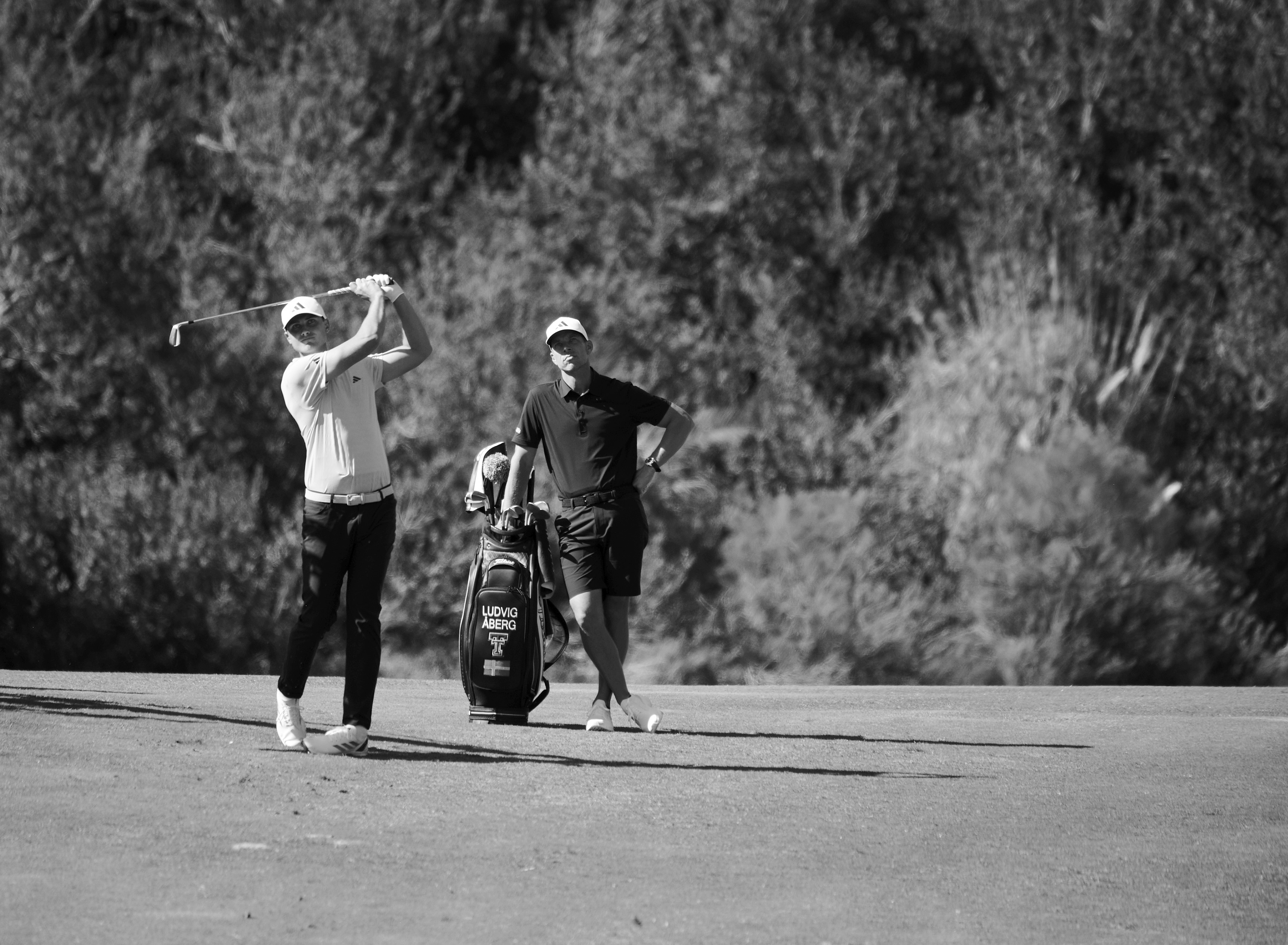
With Åberg, that process is highly deliberate. Skovron and Åberg meet two hours before they tee off to go through pins, tee shots and conditions. But when it comes to raw stats, Åberg prefers to leave it to his team.
“He says to me and Hans [Larsson, swing coach]: ‘You go look. You tell me what I need to do, and I’ll do it.’”
By the time they step onto the first tee, the goal is simple: everything has been considered, everything has gone through the filter. All that’s left is execution.
Beyond the numbers
Reassuring a player on the course doesn’t mean pushing the statistically correct answer at all costs. In fact, one of the most telling parts of Skovron’s philosophy is how little he values having a standardized "perfect" decision.
Sometimes the technically correct choice is not the right one at the moment. If a player is between clubs, or doesn’t like the look of a shot, commitment can matter more than theory.
“I’d rather have Lud (which is what Joe calls Ludvig) hit what I think is the wrong club than make an uncommitted swing,” he says.
It’s an unusually honest insight into the highest levels of the game. So much of performance depends not just on facts, but on having the support to be able to stay committed and focused on what you’re doing.
That is one reason Skovron still loves the work.
Another one is the change of scenery. Different courses mean different challenges. On soft courses where players are going low, he says, there is less for a caddie to influence. But on harder tests like Augusta National, Bay Hill, or links golf, the role really comes alive.
That is where he finds the most satisfaction: in preparing for a round on a tricky course, in seeing how small details shape big outcomes.
Beating Augusta
No place captures that better than the Masters.
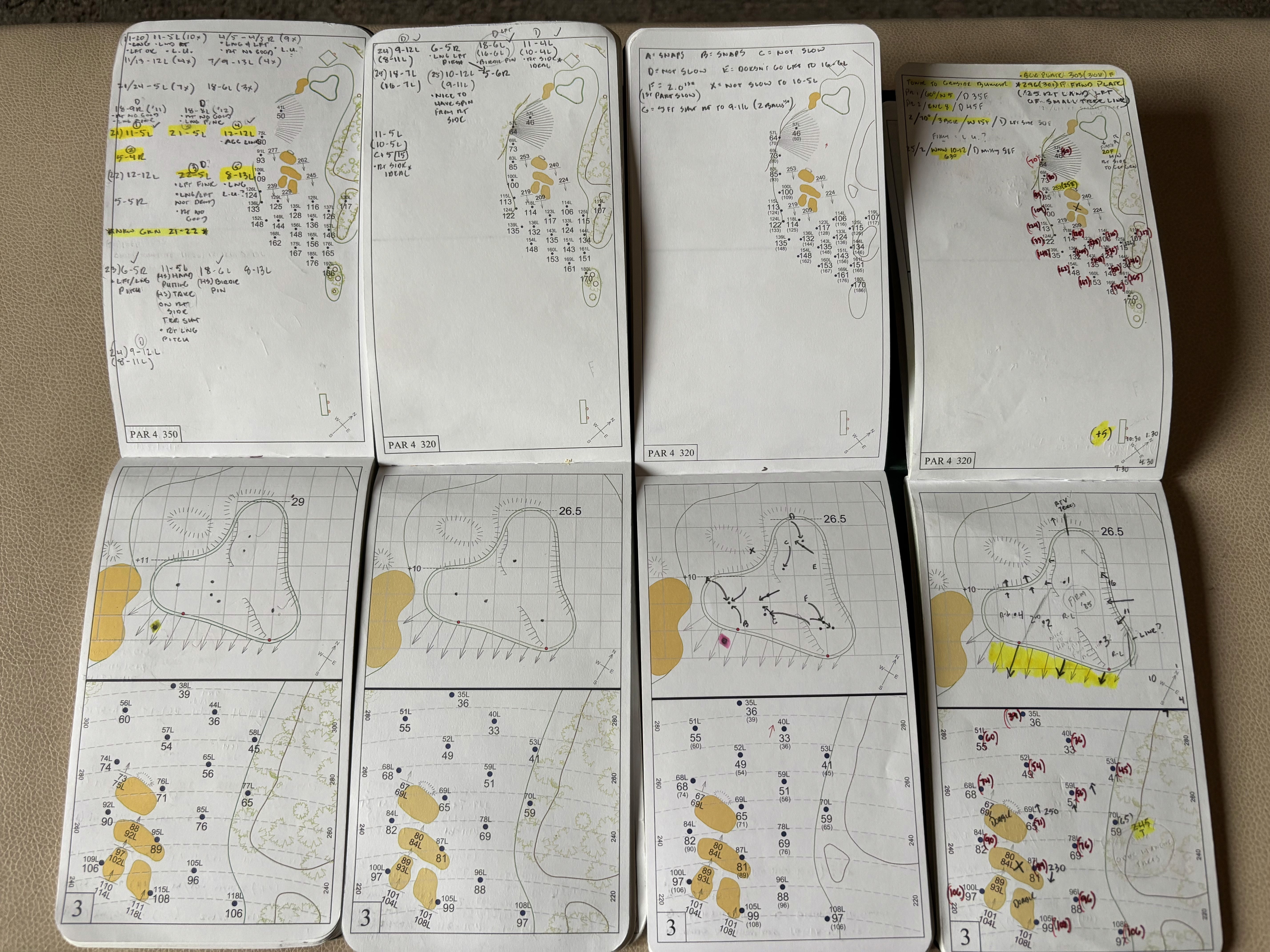
Skovron has been to Augusta so many times that he now carries three yardage books for the course: one provided by the club with the numbers for the given year, one with notes on former pin positions and other hacks collected over the years, and one dedicated to green reads and subtle putting observations. For some holes there's even a fourth.
“The amount of notes I have there is more than I have for any other place,” he says and shows us his books for the third hole at Augusta.
Why does the right person beside you matter so much?
“I just think it’s important not to feel alone out there.”
It is the simplest answer he gives all day, and maybe the most revealing.
A caddie carries more than clubs. They carry context, data, memory, reassurance, and perspective. They know when to reinforce instinct and when to challenge it.
And in the moments that decide everything, that can make all the difference.
Because even in an individual sport, the best performances are never produced alone.
Discover more about our partnership with Joe and Ludvig here.