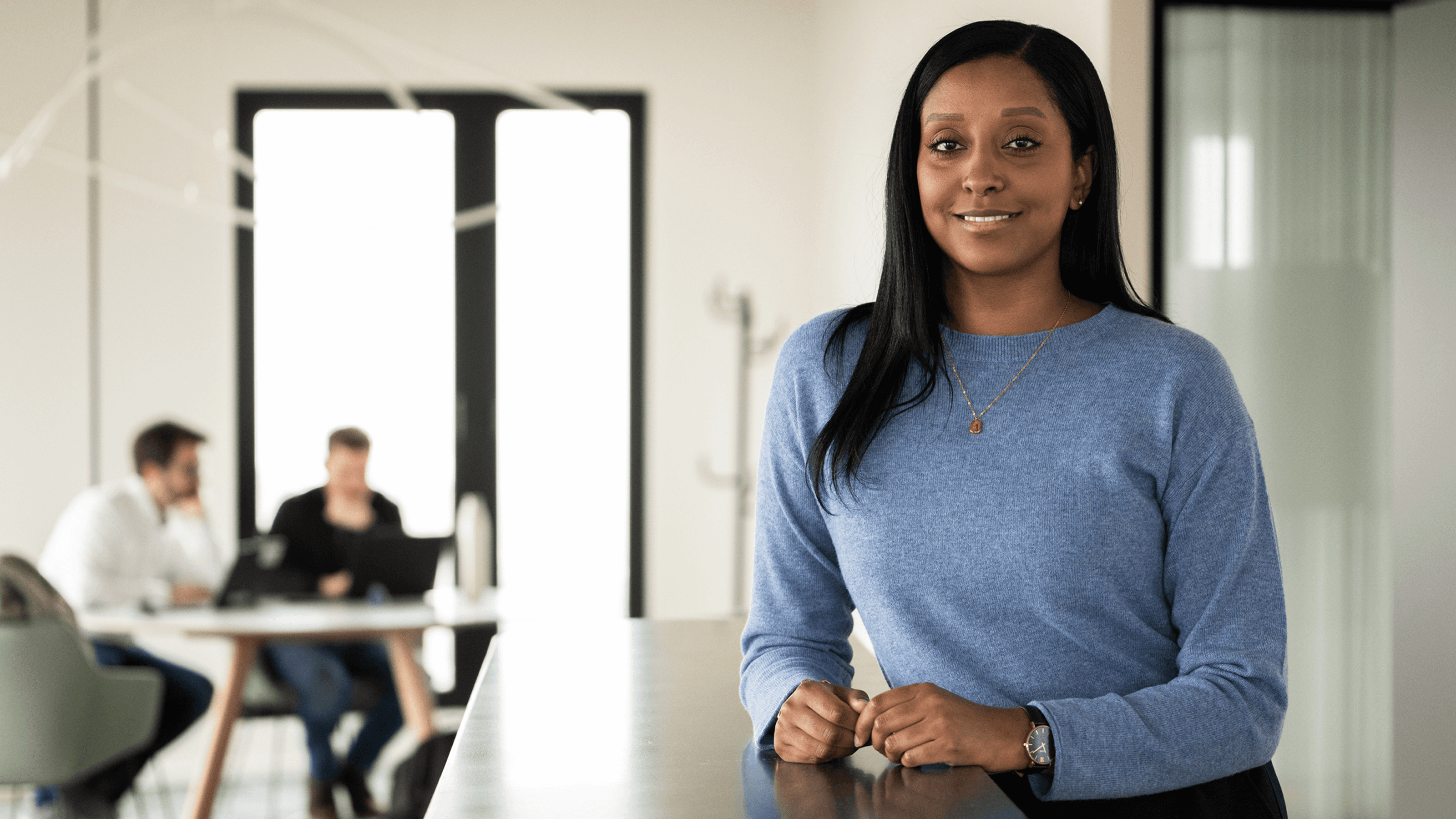
The Movers is a new Legora series created to put that generation in the spotlight — the next generation learning, experimenting, and using legal AI every day. Shaping the future of legal practice from the ground up. Our first conversation is with Rahwa Efrem, a Senior Associate in Corporate M&A at Forvis Mazars in Munich.
Legal transformation is often told through the voices of leaders. Managing partners, innovation heads, general counsel. The people setting direction.
But the most important shift happening in law right now isn't coming from the top. It's coming from associates and senior associates — the lawyers building workflows in real time, testing tools on live deals, sharing prompts with colleagues across the corridor, and figuring out where Legora genuinely changes the work.
This generation doesn't wait for permission to experiment. They treat tools like Legora as infrastructure and an accelerator, and in doing so, they're redefining what it means to be a lawyer earlier in your career.
The lawyer who wants to understand the whole business
For Rahwa Efrem, choosing a career in M&A was far from accidental.
"What drew me in was being at the intersection of law and business."
Transactions offered something litigation didn't: genuine insight into how companies operate. Every deal opens a window into an industry, a business model, and the strategic decisions driving both.
"You read financial statements, you understand the commercial idea behind an acquisition, you talk to management," she explains. "All of that feeds directly into your legal work."
That same instinct — to understand the full picture, not just the legal slice — led her to Forvis Mazars, where lawyers work alongside tax, finance, and advisory colleagues within the same firm.
"In a transaction, the legal and tax work are deeply intertwined. Here I can walk down the corridor, talk to a tax colleague about how to structure a merger, and together we develop a solution that feels like one coherent product for the client."

From document review to deal orchestration
As Rahwa's role has evolved from associate to senior associate, so has the nature of the work. Earlier in a legal career, the work is often highly detailed: reviewing data rooms, drafting documents, building checklists. Important work, but deeply granular. Now her role sits closer to the centre of the deal.
"When you become more senior, the role becomes much more about coordination and integration," she explains.
At the start of a transaction, Rahwa helps assemble an interdisciplinary team — employment, real estate, IP, IT, environmental — and coordinates communication with the client across workstreams. The final output is the due diligence report. But the real task isn't assembling information; it's shaping a narrative.
"The due diligence report shouldn't just be a collection of memos. It has to tell a coherent story about the target company. Someone has to own that narrative."
That requires genuine curiosity about how businesses work. "If you don't truly understand the company you're analysing, you will miss things when it comes to negotiating the share purchase agreement later."
Healthy scepticism, quickly overtaken
Rahwa first encountered Legora during a pilot program inside the firm. Her initial reaction was measured.
"I went into it with a healthy amount of scepticism." That changed quickly once she began testing it on real work.
One early experiment: uploading a share purchase agreement and asking Legora to identify clauses potentially problematic from a seller's perspective.
"What struck me immediately was the structure and quality of the output. It was anchored to the actual document, referencing specific provisions. It didn't feel generic."
Equally important was something that matters deeply to lawyers evaluating any new tool: honesty about limits.
"If something is ambiguous or outside the scope of what it can confidently answer, Legora says so. For lawyers, that transparency isn't a nice-to-have — it's essential."

600 documents. Minutes, not an evening.
The practical impact became clear fast. One recent deal required reviewing a newly opened data room containing more than 600 documents. The client needed a rapid answer to a deceptively simple question: what information was still missing?
Without automation, answering that question meant hours of manual work across a full legal team — the kind of task that eats an entire evening.Instead, Rahwa and her colleagues uploaded the documents into Legora and ran their standard request list against them. Within minutes, they had a structured table showing exactly what had been provided and what was still outstanding.
"We were able to share that overview with the client almost immediately. Without Legora, producing that kind of analysis would likely have taken the team the entire evening."
That speed doesn't change who owns the outcome. "Legora doesn't replace judgment," Rahwa says. "It gives you a strong foundation to start from."
Knowing where to trust, and where to lead
For Rahwa, using Legora well requires constant calibration. Some tasks are structured and well-suited to automation — extracting notice periods, identifying change-of-control clauses, cross-referencing documents. Others demand human legal assessment.
"When it comes to evaluating legal risks or deciding whether a clause is enforceable under German law, I treat Legora more like a first drafter," she says. "Every piece of work that goes to a client is reviewed by a lawyer. That's simply what responsible legal practice looks like."
That calibration is itself a skill — one associates are building in real time, deal by deal, with tools like Legora.
"We're still at the very beginning of understanding where AI can be trusted fully and where human oversight remains essential. Being thoughtful about that distinction is what separates firms using Legora well from those using it carelessly."
The opportunity: thinking earlier
For lawyers earlier in their careers, the rise of AI raises a version of the same question: what does the early career actually look like now? Rahwa sees it as an expansion, not a threat.
"Tasks like document review or drafting initial memos used to take a lot of time. Now, with Legora, they happen much faster." That shift doesn't reduce the role of associates — it accelerates their development. The hours recovered from manual review become hours available for higher-order work.
"Associates are expected to think earlier. Not just execute."
That means investing deliberately in the skills that define strong lawyers: strategic thinking, negotiation, relationship-building, decision-making under uncertainty. The work that used to arrive years into a career is arriving sooner.
"The lawyers who will thrive are the ones who treat Legora as an accelerator for their own capabilities. Not as a shortcut."

Prompts in the corridor
Inside the firm, adoption has been shaped as much by conversation as by training. Lawyers have begun collecting useful prompts and workflows — sharing them informally across practice groups, running through them together on live problems.
"Just this morning a colleague messaged me asking about a prompt I used to analyse a data room," Rahwa says. "We shared screens, ran it together, and within minutes he had a solution."
That informal exchange has been critical to how Legora has embedded itself in the team's work.
"Talking about how we use Legora is the most important part of implementation," she says. "Once lawyers see Legora working in practice, the conversation naturally changes. The question shifts from 'Should we use AI?' to 'How do we all use it well?'"
Curious about what's next
Looking ahead, Rahwa expects Legora to become a core part of legal practice — especially in due diligence, contract review, and drafting. The lawyers she most admires aren't resisting that change. They're shaping it. And for the next generation — the associates running experiments, sharing prompts, and pushing the work forward — the defining trait may be the same one that has always separated good lawyers from great ones.
"Curiosity has always been essential to becoming a good lawyer," she says. "AI is just the newest thing it's essential to be curious about."